Run Flat Tire Inserts for Military Vehicles: Function, Maintenance, and Service Considerations
Run flat tire inserts are central to many military and armored vehicle tire systems. This guide explains what run-flat inserts do, why they affect removal and installation workflows, and how specialized equipment supports military tire maintenance.
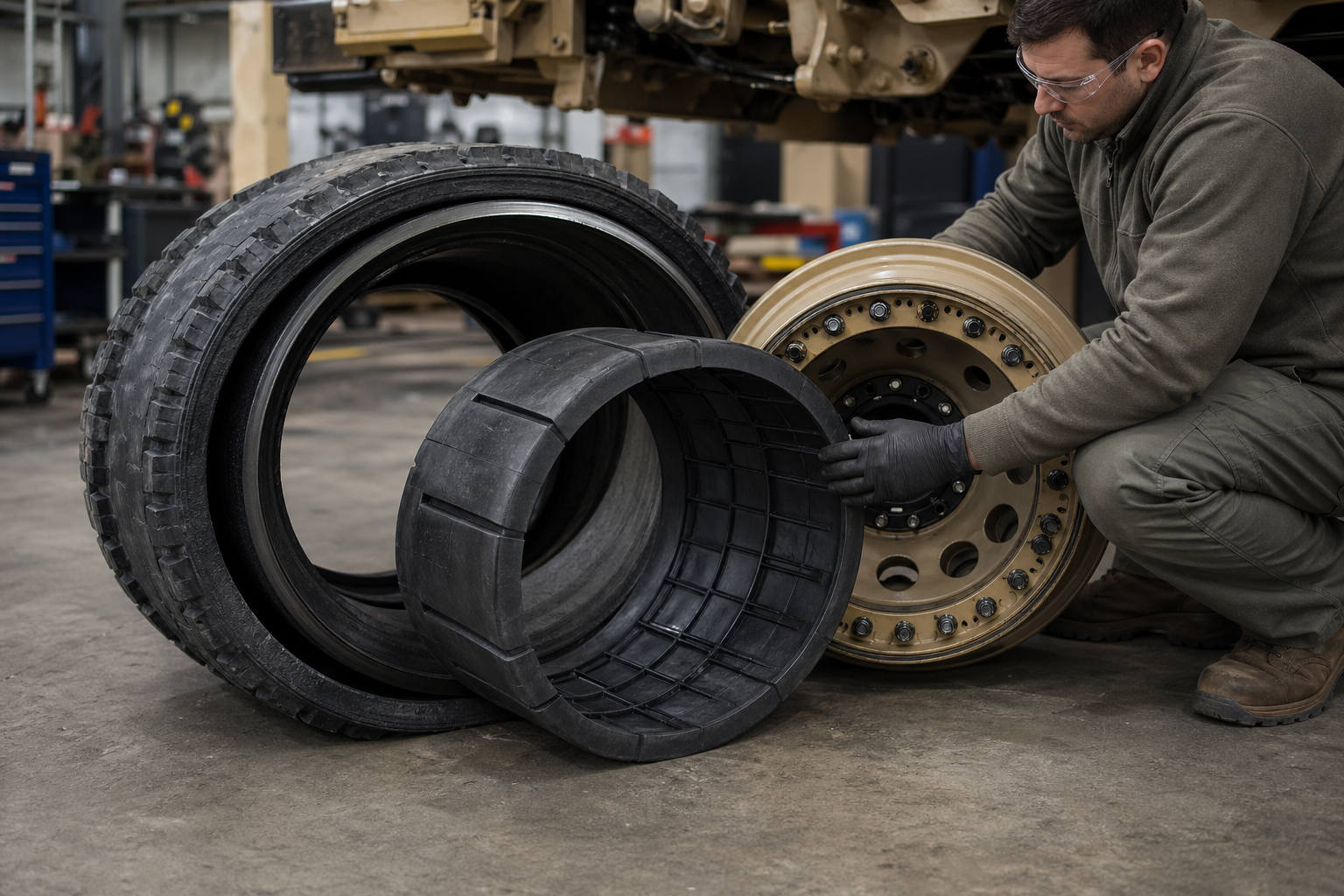
Run flat tire inserts are one of the most important components inside many military and armored vehicle tire systems. While the tire itself is visible from the outside, the internal run-flat insert plays a key role in how the full wheel assembly performs after tire pressure loss or damage.
For military maintenance teams, defense contractors, and armored fleet operators, run-flat inserts are not only a tire component. They directly affect removal, installation, inspection, reassembly, and the type of equipment needed to service the tire system correctly.
This guide explains what run flat tire inserts do, why they matter in military vehicle tire maintenance, how they connect to run-flat tire systems, and why specialized machines are often evaluated for insert-related service workflows. If you are new to the broader tire system, start with this guide on military run flat tires before reviewing insert-specific maintenance considerations.
What Are Run Flat Tire Inserts?
A run flat insert is an internal component installed inside a tire assembly. Its purpose is to help support the tire structure after pressure loss, depending on the vehicle, tire system, load, and operating conditions.
In many military applications, the insert sits inside the tire and works as part of the complete wheel assembly. The system may include:
- tire casing
- run-flat insert
- rim or wheel assembly
- beadlock or locking components
- valve and inflation components
- vehicle-specific fitment requirements
The phrase run flat tire inserts usually refers to the internal support structure, while terms like military run flat inserts refer to similar components used in military, tactical, armored, or defense-related vehicles.
These inserts are often discussed alongside military tire changers because the insert directly affects how the tire is removed, serviced, and reinstalled.
Why Military Run Flat Inserts Matter
Military and armored vehicle tires operate under different requirements than standard commercial tires. They may carry heavier loads, support armored platforms, and operate in more demanding environments.
The run-flat insert matters because it can help the tire assembly maintain limited mobility after damage or pressure loss. From a maintenance perspective, however, the insert also makes the tire assembly more complex.
Maintenance teams must consider:
- how the insert is installed
- how it is removed
- whether it can be inspected or replaced
- how it interacts with the rim and tire casing
- what equipment is needed to service it
- whether the workflow is repeatable for multiple operators
This is why insert-related keywords such as run flat inserts, run flat insert, and military run flat inserts often signal a more technical search intent. The user is usually not only asking what the part is. They may be trying to understand how the full system is maintained.
The insert-related workflow becomes clearer when viewed through the run-flat removal and installation process, where removal, insert access, and reassembly are handled as a connected sequence.
How Run Flat Tire Inserts Fit Inside the Full Tire Assembly
A run-flat insert should not be understood in isolation. It is part of a complete tire and wheel system.
A military tire assembly may include:
- the outer tire
- the internal insert
- the rim or wheel
- bead seating components
- locking elements
- valve hardware
- balancing and fitment considerations
- platform-specific requirements
When the tire is serviced, these components interact with each other. Removing the tire may expose the insert. Removing the insert may require controlled force, proper positioning, and equipment designed for that assembly type.
This is where the difference between ordinary tire service and military run-flat tire maintenance becomes clear. A standard tire machine may be able to remove conventional tires, but it may not be designed for insert extraction, handling, or reinstallation.
For readers comparing full system maintenance, this guide to a run flat tire machine explains the broader equipment category.
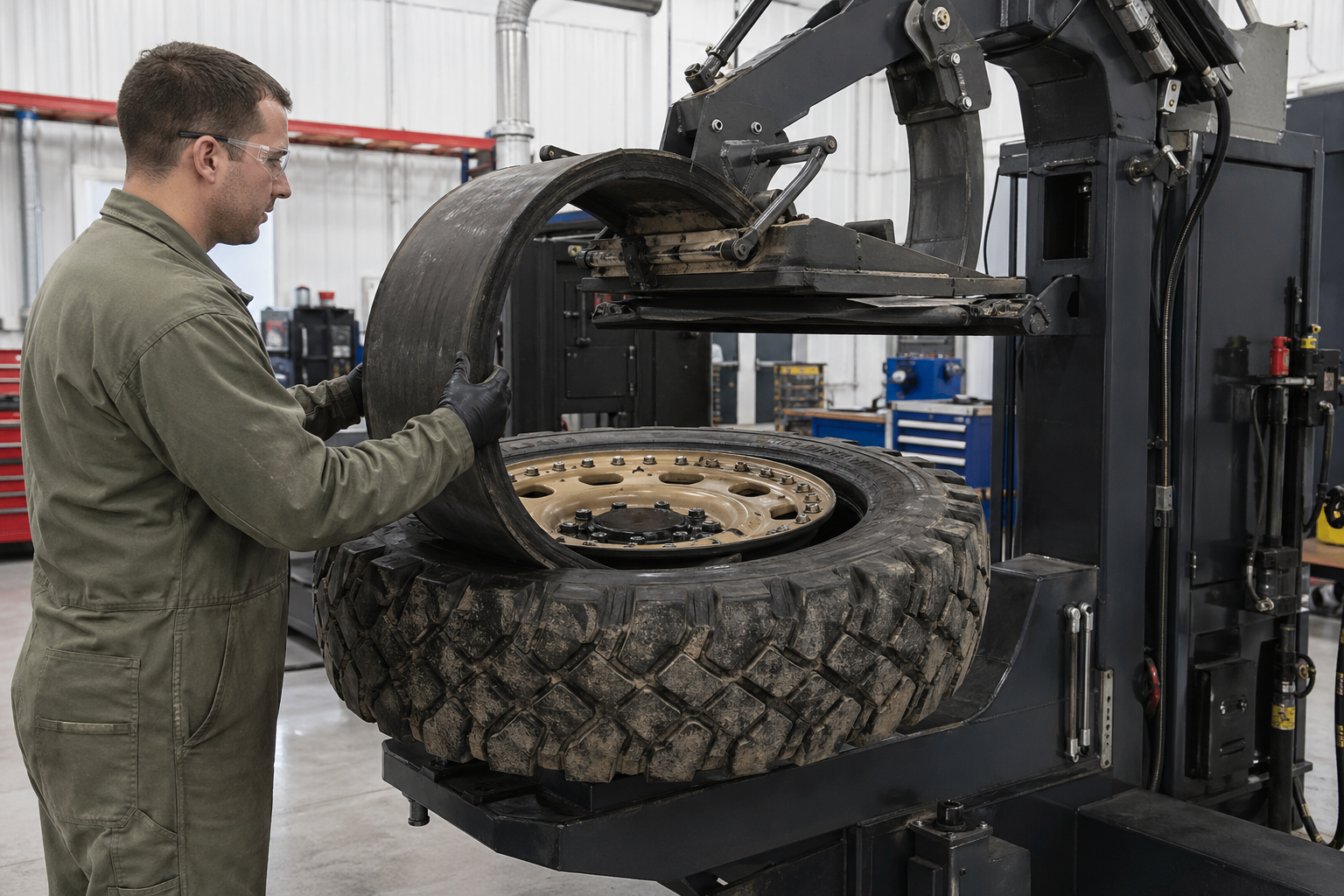
Run-Flat Insert Removal: Why the Process Requires Control
Removing a run-flat insert is one of the most technically important parts of the service process.
The insert is usually fitted tightly inside the tire assembly. Depending on the tire type, rim structure, and insert design, removal may involve significant resistance. This is especially relevant for armored vehicle tires, where the assembly may be heavier and more rigid than standard commercial vehicle tires.
A controlled removal process helps maintenance teams manage:
- wheel positioning
- tire separation
- insert exposure
- insert extraction
- rim access
- operator workflow
- inspection preparation
The goal is not simply to apply force. The goal is to apply the right type of controlled mechanical assistance for the tire system being serviced.
This is one reason teams may evaluate a military tire insert machine or a run-flat-specific changer rather than a general tire service machine.
Machine-assisted removal and installation workflows are covered in the run-flat tire changer system, especially where insert handling is part of the service process.
Run-Flat Insert Installation: What Maintenance Teams Should Consider
Installation is just as important as removal. Once the tire, insert, or rim has been inspected or serviced, the assembly must be put back together correctly.
A run-flat insert installation process may require attention to:
- insert alignment
- tire casing position
- rim structure
- seating and fitment
- controlled force application
- operator consistency
- compatibility with the tire assembly
The term run flat inserting machine is sometimes used by searchers looking for equipment that can support this stage of the workflow. In practice, the equipment must be evaluated against the full assembly, not only the insert.
Maintenance teams should ask:
- What insert type is being serviced?
- What tire size and rim type are involved?
- Is the assembly used on an armored or tactical vehicle?
- Will the work happen in a workshop or field environment?
- Are operators trained for repeatable insert handling?
- Is technical documentation available?
For fixed maintenance environments, the GMR-023 Workshop Model is a useful reference for workshop-based run-flat tire service.
Hutchinson Run Flat Inserts and Technical Search Intent
The keyword Hutchinson run flat inserts often appears in technical research around military tire systems. Users searching this term may be trying to understand insert structure, compatibility, removal, installation, or maintenance requirements.
When discussing Hutchinson-related systems, it is important to avoid unsupported compatibility claims. Not every machine, tire assembly, or insert type should be assumed to work together without technical review.
A careful approach is better:
- identify the tire and rim structure
- understand the insert type
- confirm maintenance requirements
- review removal and installation workflow
- evaluate machine compatibility
- check documentation and support resources
For readers specifically researching branded insert workflows, the Hutchinson run-flat installation and removal guide provides a more focused technical reference.
Why Standard Tire Equipment May Not Be Enough
A standard tire changer is usually designed for conventional tire service. It may work well for passenger vehicles, commercial trucks, or general workshop applications, but military run-flat tire assemblies can require more specialized handling.
The main reasons include:
- heavier tire and wheel assemblies
- internal insert resistance
- reinforced tire construction
- multi-piece rim structures
- armored vehicle fitment requirements
- more controlled removal and installation stages
- higher operator consistency needs
For this reason, teams should be careful when comparing a general heavy-duty tire changer with a machine designed specifically for run-flat assemblies.
The question should not be only, “Can this machine handle a large tire?”
The better question is, “Can this machine support the complete run-flat tire and insert service workflow?”
For armored vehicle maintenance use cases, this guide on a run flat changer for armored vehicles provides additional machine-focused context.
Workshop, Container, and Trailer Support for Insert Maintenance
Run-flat insert maintenance may happen in different environments. The right equipment format depends on where the tire service work takes place.
Workshop-Based Maintenance
A workshop setup is usually relevant for fixed maintenance facilities, military depots, contractor service centers, and vehicle maintenance hubs.
It may make sense when:
- tire service happens in a dedicated facility
- the team has regular maintenance volume
- stable equipment placement is preferred
- repeatable operator workflow is important
For fixed service environments, the GMR-023 Workshop Model is the relevant workshop configuration.
Container-Based Maintenance
A containerized setup may support teams that need a more deployable maintenance environment. This can be useful when tire and insert service capability needs to move closer to field operations while remaining organized inside a structured unit.
A container format may be relevant when:
- operations are distributed
- maintenance locations change
- equipment needs protected transportability
- field service requires more structure than an open setup
For deployable maintenance needs, the GMH-098 Container Model explains the container-based setup.
Trailer-Based Maintenance
A trailer setup can support mobile maintenance across multiple locations. It may be relevant when field teams need to move equipment closer to vehicle fleets.
A trailer format may be useful when:
- fleet locations change
- service capability needs to move
- a permanent workshop is not always available
- field maintenance support is required
For mobile maintenance requirements, the GMT-099 Trailer Model is the relevant trailer-based reference.
The military tire changers page also compares these three formats from a tire-service perspective.
What Procurement and Maintenance Teams Should Evaluate
Before selecting a run-flat insert maintenance process or machine-supported workflow, teams should evaluate the full technical context.
Insert Type
Different inserts may have different handling requirements. The insert type should be identified before machine compatibility is assumed.
Tire and Rim Structure
The tire casing, rim type, bead interface, and wheel design all affect the service process.
Vehicle Platform
A tire assembly used on one armored vehicle may not be the same as a tire assembly used on another platform. Fleet variety matters.
Maintenance Location
A fixed workshop, deployable container, and mobile trailer setup each serve different operational needs.
Operator Workflow
Teams should consider whether the process can be performed consistently by trained personnel across repeated maintenance cycles.
Documentation
Technical specifications, model details, and process documentation are important for procurement researchers, contractors, and maintenance supervisors.
Future Fleet Requirements
If the organization expects to maintain multiple vehicle types, flexibility may be important.
Common Mistakes in Run-Flat Insert Maintenance Planning
Mistake 1: Treating the Insert as a Small Accessory
The insert is a central part of the run-flat tire system. It should be treated as a major factor in maintenance planning.
Mistake 2: Choosing Equipment Only by Tire Size
Tire diameter and weight matter, but they do not fully define the service requirement. Insert handling is equally important.
Mistake 3: Ignoring Rim Structure
The rim and wheel assembly can change the removal and installation process. Teams should evaluate the full assembly, not just the tire.
Mistake 4: Assuming All Run-Flat Systems Are the Same
Different systems may have different service requirements. Technical review is important before selecting a process or machine.
Mistake 5: Overlooking Field vs Workshop Needs
The best equipment format depends on where maintenance actually happens. A fixed workshop and a mobile field unit have different requirements.
How Run Flat Tire Inserts Connect to Fleet Maintenance
Run flat tire inserts directly affect how military tire assemblies are serviced. They influence removal, installation, inspection, equipment selection, and maintenance workflow planning.
For armored and tactical vehicles, a structured approach to insert service can support more consistent tire maintenance across the fleet.
A complete evaluation should connect:
- tire system knowledge
- insert type
- rim structure
- vehicle platform
- machine capability
- deployment format
- operator workflow
- documentation and support
This is why insert-focused content naturally connects with broader topics such as military run flat tires, military tire changers, and machine-assisted run-flat maintenance.
Final Considerations
Run flat tire inserts are a critical part of many military and armored vehicle tire systems. They affect not only tire performance, but also the way maintenance teams remove, inspect, reinstall, and service the full assembly.
For maintenance teams, the insert should be evaluated together with the tire, rim, vehicle platform, operating environment, and equipment workflow.
A standard tire service process may not be enough when the assembly includes reinforced military tires and internal run-flat inserts. A more specialized workflow may be needed, especially when teams must support heavy-duty assemblies, mixed fleets, field maintenance, or repeatable operator processes.
For technical model details, machine-assisted insert handling, and run-flat tire service workflows, the run-flat removal and installation process provides the most relevant next step.
Questions Answered
What are run flat tire inserts?
Run flat tire inserts are internal components installed inside certain tire assemblies. They help support the tire structure after pressure loss and are commonly used in military, armored, and tactical vehicle tire systems.
What are military run flat inserts?
Military run flat inserts are run-flat support components used inside military or defense-related vehicle tire assemblies. They are part of the complete tire, insert, rim, and wheel system.
Are run flat inserts serviced like standard tire parts?
Not usually. Run flat inserts are positioned inside the tire assembly and may require specialized removal, inspection, and installation procedures.
Why do run flat tire inserts affect maintenance equipment selection?
The insert changes the service workflow. Equipment must support not only tire removal but also insert handling, positioning, and reassembly.
What is a military tire insert machine?
A military tire insert machine generally refers to equipment used to support the removal or installation of run-flat inserts in military tire assemblies. The exact equipment requirement depends on the tire, rim, insert type, and vehicle platform.
Are Hutchinson run flat inserts different from other run-flat inserts?
Hutchinson-related systems are often researched in military tire maintenance contexts. Teams should review technical documentation and confirm compatibility before assuming that any machine or process applies to a specific Hutchinson run-flat system.
Continue Through The Archive
The related grid below follows the same redesigned editorial system as the main blog landing page.
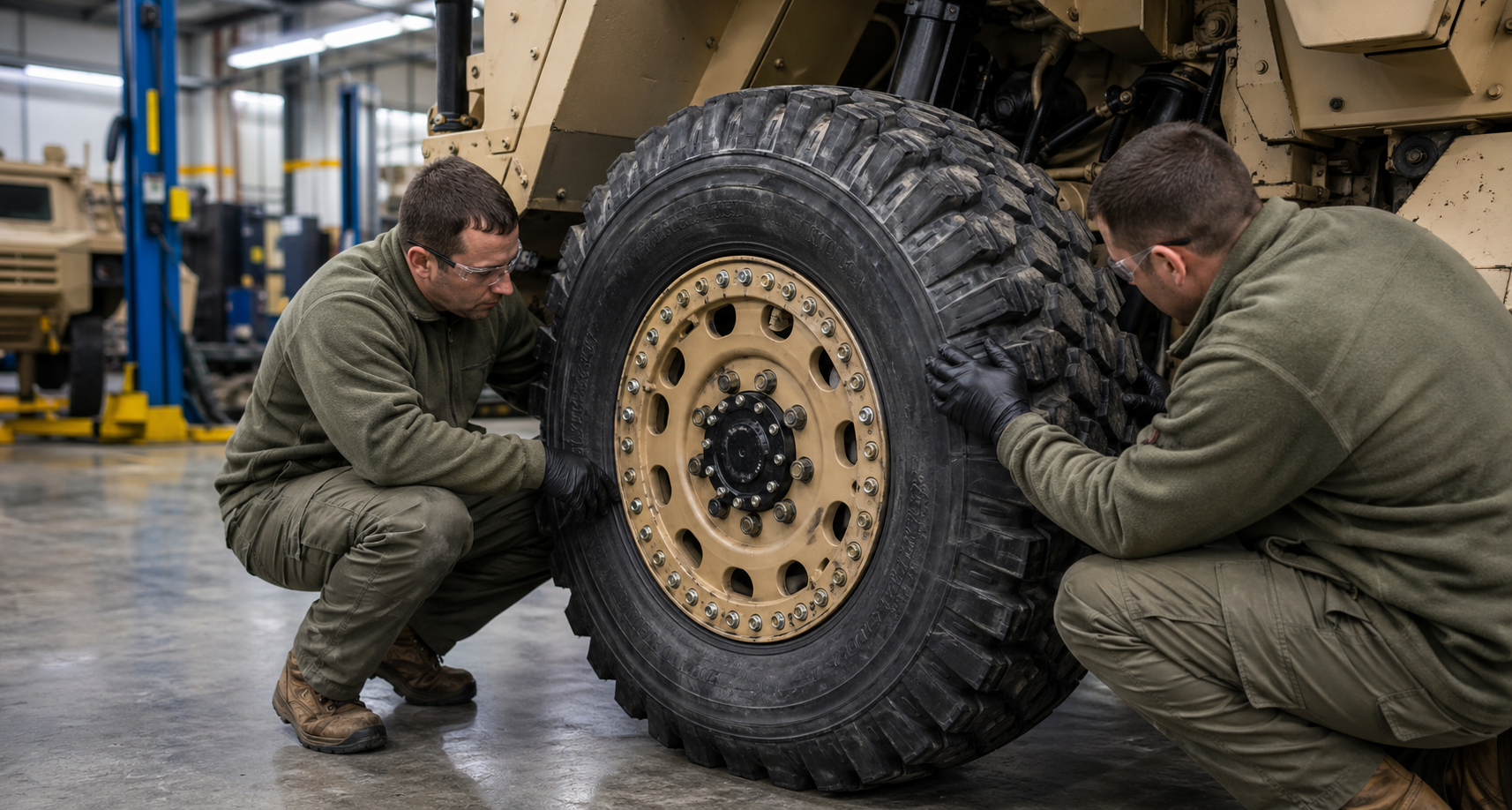
Military Run Flat Tires: Systems, Inserts, and Maintenance Considerations
Military run flat tires are part of a complete tire, insert, rim, and maintenance system used on tactical and armored vehicles. This guide explains how military run flats work, why run-flat inserts matter, and how specialized tire changers support controlled removal, installation, and maintenance workflows.
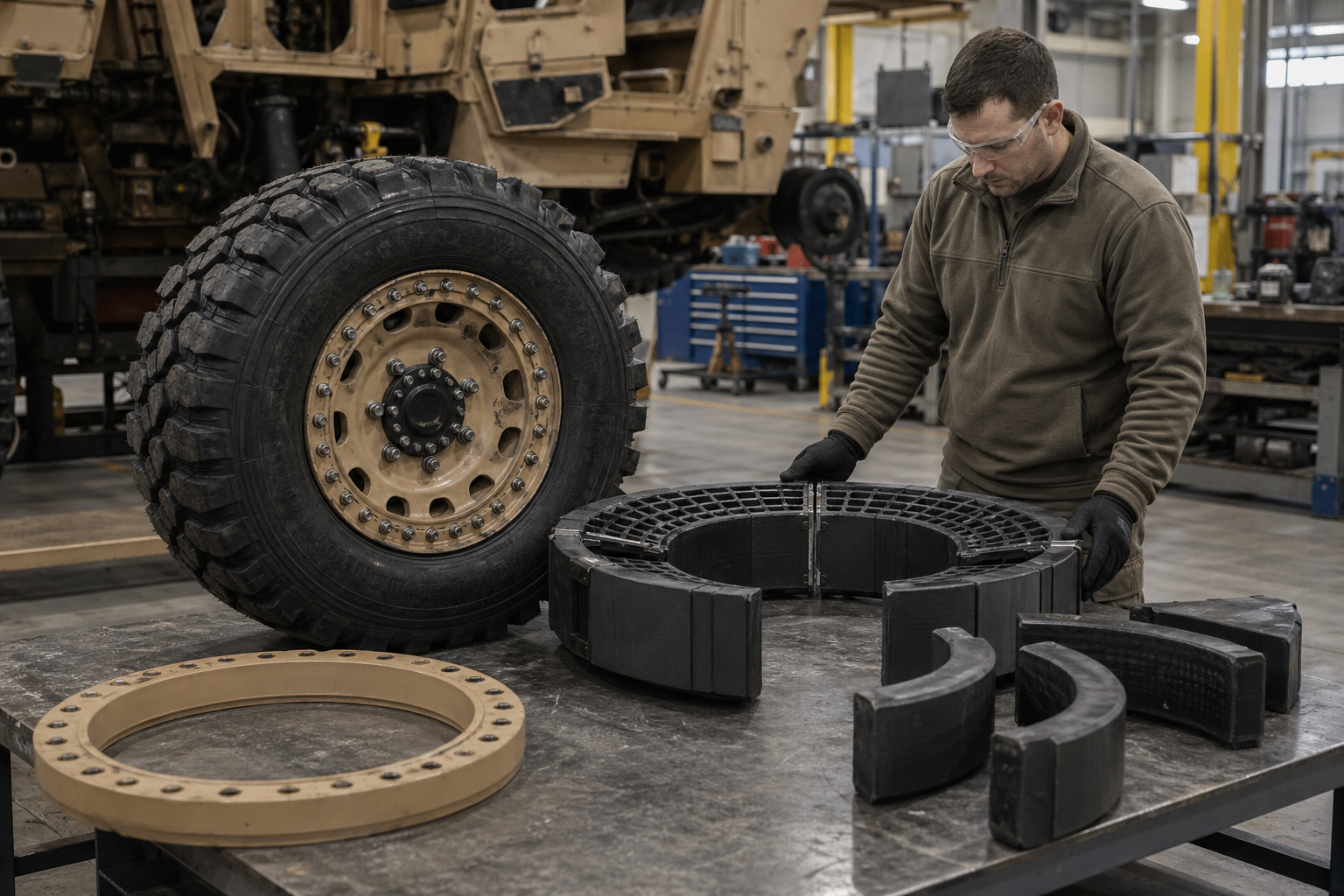
Hutchinson Run Flat Systems: Inserts, Installation, and Military Maintenance Context
Hutchinson run flat systems are closely connected to military tire inserts, installation workflows, and machine-assisted maintenance. This guide explains how Hutchinson run flat inserts fit into military tire assemblies and what maintenance teams should evaluate during removal, installation, and service planning.
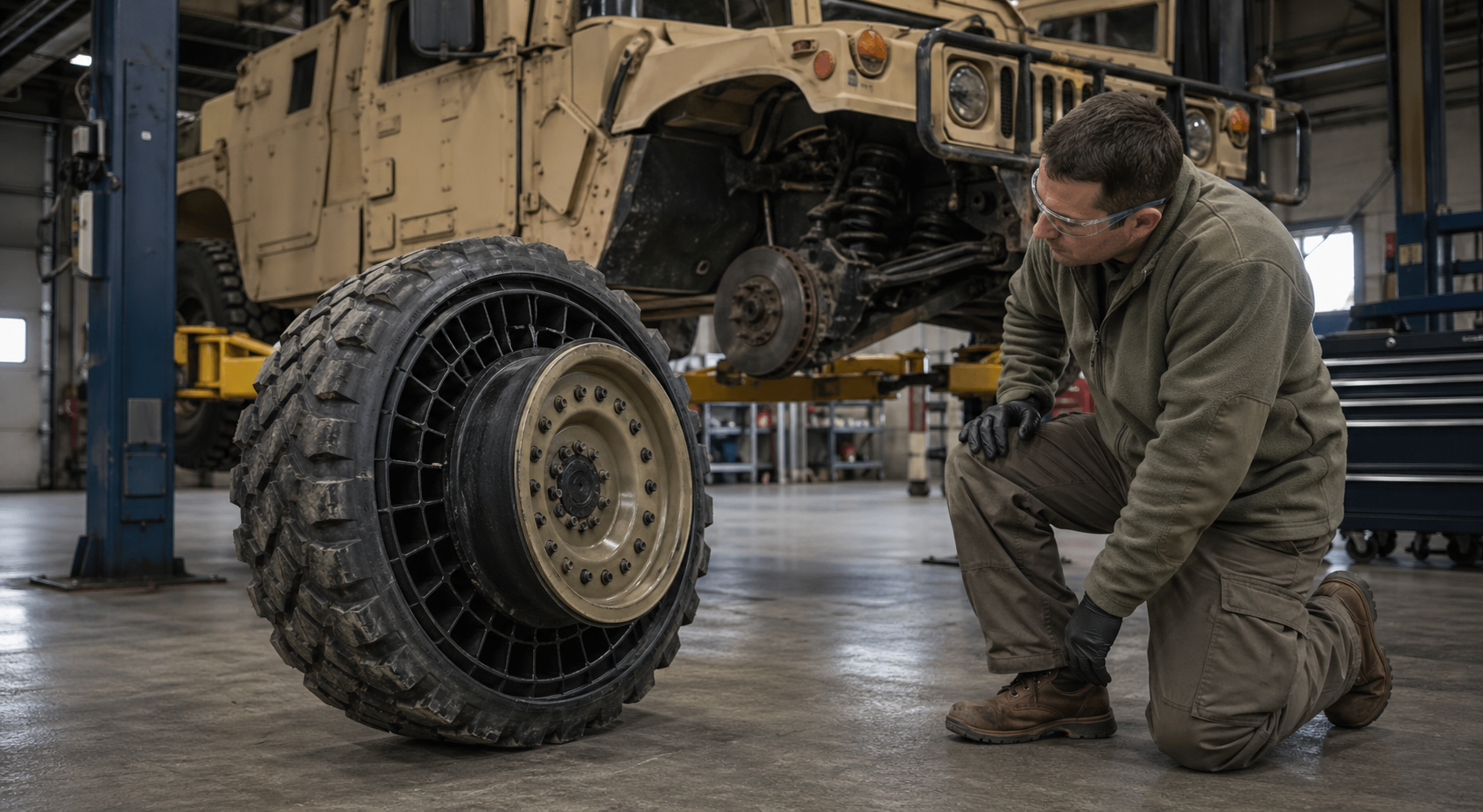
Humvee Run Flat Inserts: Military Tire Maintenance and Service Considerations
Humvee run flat inserts are internal support components inside certain military Humvee tire assemblies. This guide explains how they affect tire maintenance, what teams should evaluate beyond tire size, and how machine-supported workflows can support removal, inspection, and reassembly.