Military Run Flat Tires: Systems, Inserts, and Maintenance Considerations
Military run flat tires are part of a complete tire, insert, rim, and maintenance system used on tactical and armored vehicles. This guide explains how military run flats work, why run-flat inserts matter, and how specialized tire changers support controlled removal, installation, and maintenance workflows.
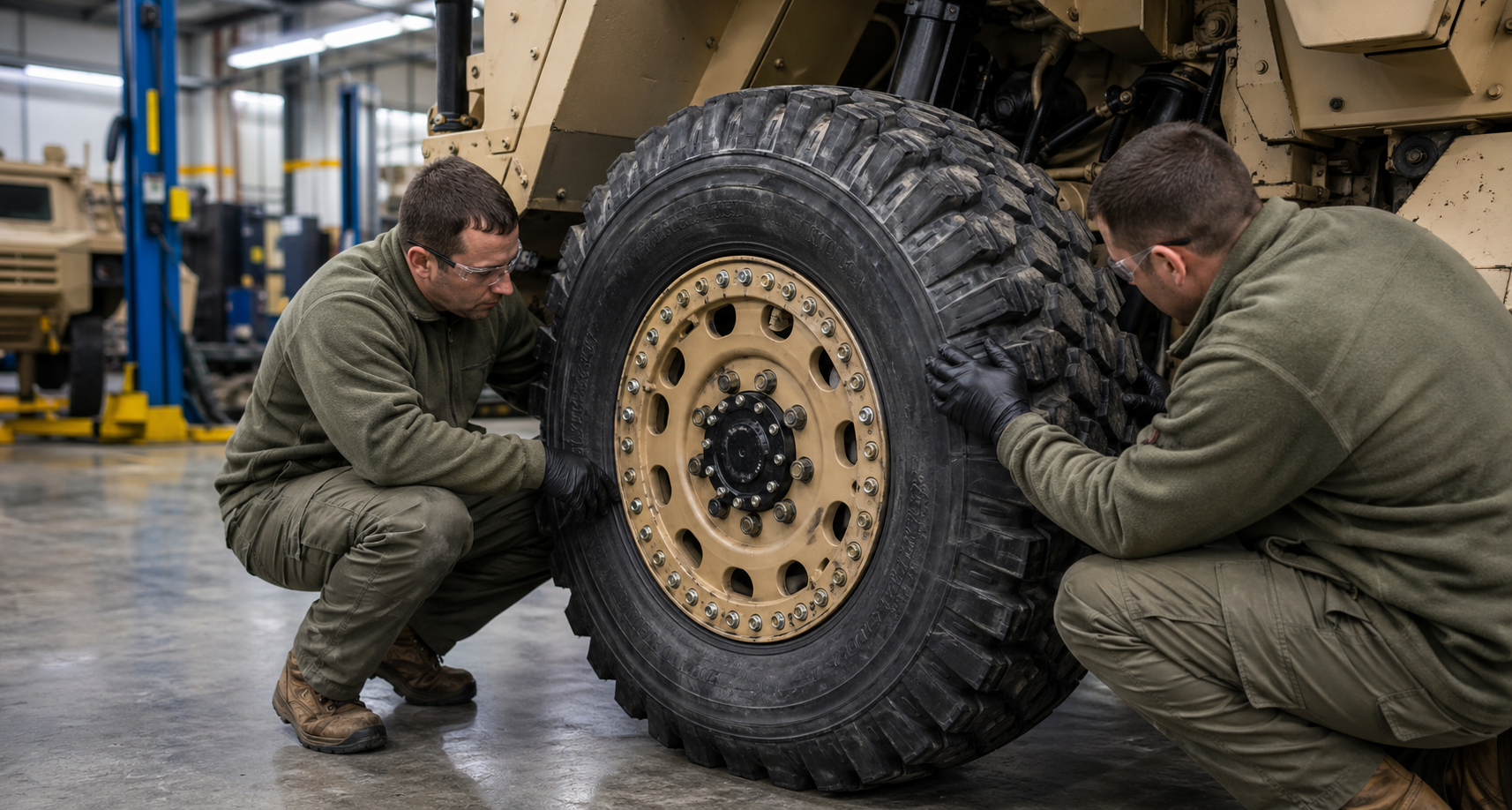
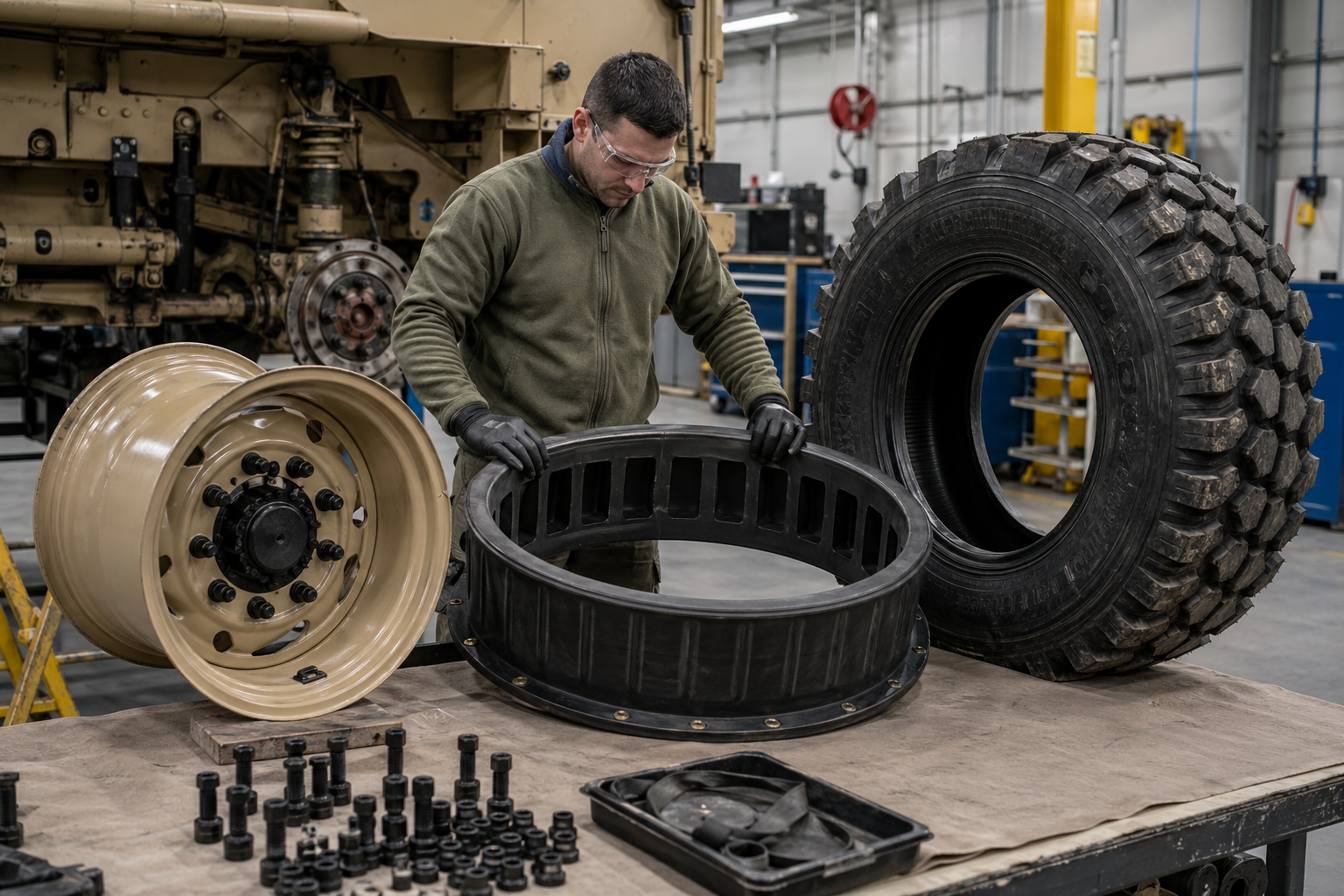
Military run flat tires are used on tactical, armored, and defense-related vehicles where mobility, tire structure, and maintenance requirements are more demanding than standard commercial vehicle applications. In this context, a run-flat tire is not only a tire. It is part of a larger wheel assembly that may include reinforced tire construction, a heavy-duty rim, internal run-flat inserts, beadlock components, and a maintenance workflow designed around military vehicle use.
For maintenance teams, defense contractors, logistics units, and procurement researchers, understanding military run flats means looking beyond the tire itself. The full system includes the tire, insert, wheel assembly, vehicle platform, and the equipment used to remove, install, inspect, and service the assembly.
This guide explains how military run flat tires work, why inserts are important, how they differ from standard tires, and how specialized maintenance equipment supports military tire service. In more advanced maintenance environments, the tire system is often evaluated together with a run-flat tire changer system because tire structure, insert handling, and machine-supported service are closely connected.
What Are Military Run Flat Tires?
Military run flat tires are tire systems designed to help a vehicle continue moving for a limited distance after tire pressure loss or tire damage. They are commonly associated with armored vehicles, tactical vehicles, military trucks, and other vehicles where mobility can be operationally important.
A military run-flat tire system may include:
- reinforced tire construction
- heavy-duty tire casing
- internal run-flat insert
- compatible rim or wheel assembly
- beadlock or locking components
- platform-specific tire sizing
- maintenance requirements for removal and installation
The phrase military run flats is often used to describe the broader tire system, not just the tire casing. In many cases, the run-flat capability depends on the internal insert and the way the tire, insert, and rim work together.
That is why servicing these assemblies can be more complex than standard commercial tire service. Maintenance teams may need to remove the tire, access the insert, inspect or replace components, and reassemble the system correctly.
The equipment side of this process is closely related to how a run flat tire machine supports controlled removal and installation workflows.
How Run Flat Military Tires Differ from Standard Tires
Run flat military tires differ from standard tires in both structure and maintenance requirements.
A conventional tire is usually designed around standard road use, expected load ratings, and typical service procedures. Military tires are often designed for heavier platforms, more demanding terrain, and mission-specific vehicle requirements.
The differences may include:
- stronger sidewall construction
- higher load capacity
- compatibility with armored or tactical vehicles
- internal run-flat insert systems
- specialized rims or wheel assemblies
- heavier total assembly weight
- more demanding removal and installation procedures
This makes military tire maintenance a more technical process.
For example, a standard tire service facility may be able to handle large commercial tires, but that does not automatically mean it can service military run flat tires with internal inserts and reinforced wheel assemblies. The run-flat insert changes the entire maintenance workflow.
This is why many teams evaluate both the tire system and the equipment used to service it, including military tire changers designed for run-flat assemblies.
The Role of Run-Flat Inserts
Run-flat inserts are one of the most important components inside many military run-flat tire systems.
A run-flat insert is positioned inside the tire assembly. Its purpose is to help support continued movement after tire pressure loss, depending on the system design, vehicle weight, and operational conditions.
From a maintenance perspective, the insert is important because it affects:
- how the tire is removed
- how the wheel assembly is opened
- how much force may be needed during service
- how the tire is reinstalled
- what equipment is required
- how operators plan the maintenance workflow
Terms such as military run flat inserts, run flat tire inserts, and run flat inserts all point to this internal component.
The insert is also one of the key reasons why a standard tire changer may not be enough. Servicing the insert requires equipment and procedures that can account for the structure of the full assembly.
A full run-flat removal and installation workflow helps show how tire positioning, insert access, removal, and reassembly fit into one service sequence.
Why Military Tire Maintenance Requires Specialized Equipment
Military tire maintenance is not only about replacing a tire. It may involve inspection, removal, insert handling, reassembly, and compatibility checks across different vehicle platforms.
A complete military tire assembly can be heavy, rigid, and difficult to handle manually. The maintenance team may need to manage:
- large tire diameter
- heavy wheel weight
- reinforced tire casing
- internal insert resistance
- multi-piece rim structure
- bead separation
- controlled reassembly
- platform-specific fit requirements
This is where specialized equipment becomes relevant.
A machine-supported workflow can help maintenance teams handle the tire and insert in a more controlled way. It can also support repeatability, which matters when multiple operators or rotating teams are responsible for the same type of service work.
Machine selection is usually tied to the same technical requirements covered in the broader military tire machine platform, especially where heavy-duty run-flat assemblies and internal inserts are involved.
Military Tires and Rims: Why the Full Assembly Matters
The keyword military tires and rims is important because run-flat tire performance and maintenance cannot be understood by looking at the tire alone.
The wheel assembly may include:
- tire casing
- rim or wheel structure
- run-flat insert
- locking components
- bead interface
- valve and inflation components
- vehicle-specific fitment requirements
During maintenance, each of these components can affect the service workflow.
For example, a tire may be compatible with a particular vehicle, but the rim structure or insert type may require specialized tools or procedures during removal. Similarly, different vehicle families may use different tire and wheel assemblies even when they appear similar at first glance.
This is why maintenance planning should consider the full assembly, not only the tire label or size.
Hutchinson Run Flat Systems in Military Maintenance Context
The keyword Hutchinson run flat appears frequently in military tire and run-flat system research. Hutchinson systems are often discussed in relation to military vehicle tires, run-flat inserts, and assembly/disassembly requirements.
From an SEO and maintenance perspective, the important point is that Hutchinson-related searches often indicate a more technical user. The person may be researching:
- run-flat inserts
- military tire assembly
- installation or removal requirements
- maintenance equipment
- compatible machines
- armored vehicle tire service procedures
When discussing Hutchinson run flat systems, content should remain technical and careful. The goal is not to make unsupported compatibility claims. The goal is to explain why branded run-flat systems often require a proper maintenance workflow.
For deeper process information, the Hutchinson run-flat installation and removal guide is a relevant supporting reference for branded run-flat system maintenance.
Deployment Formats for Military Tire Service
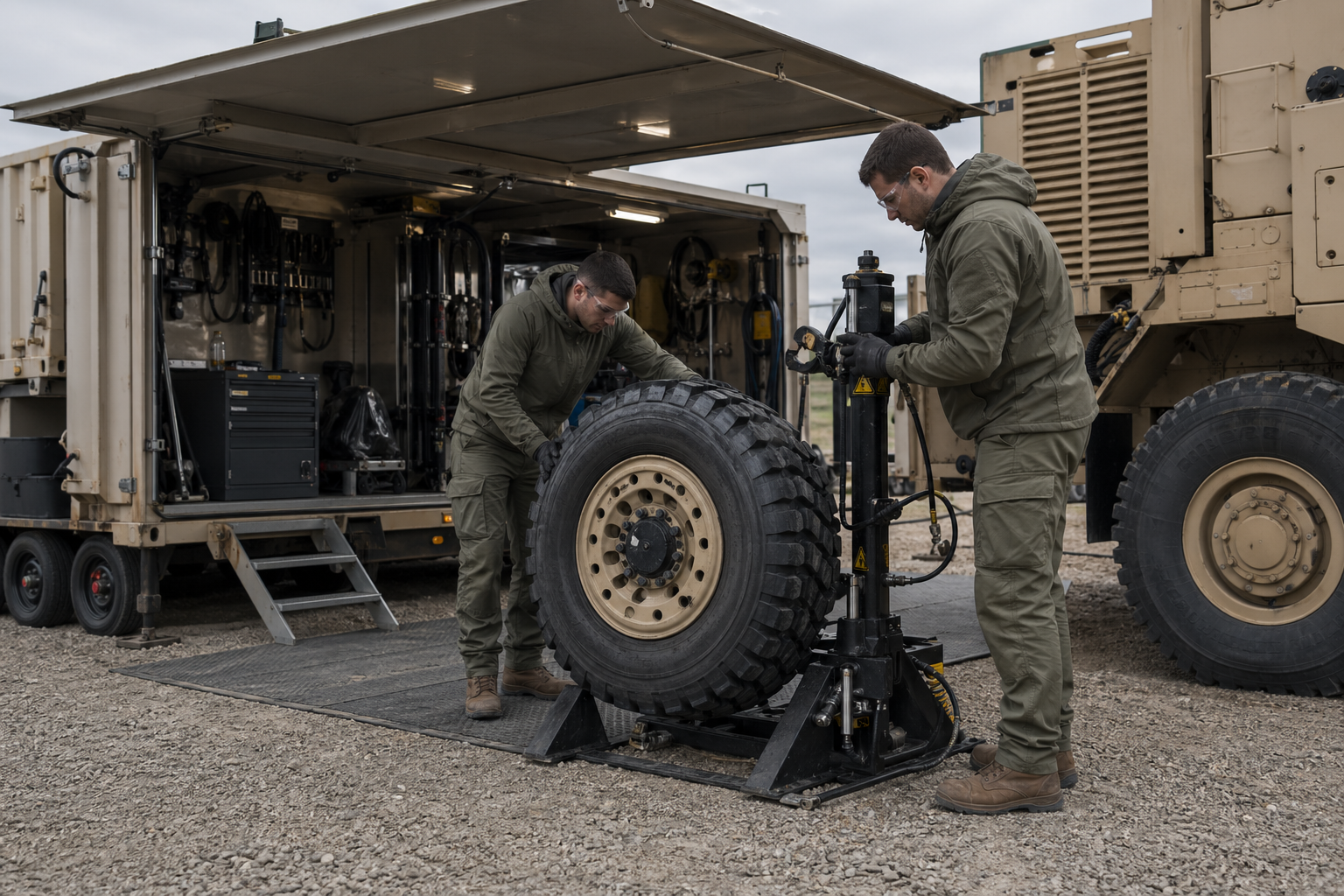
Military tire service does not always happen in one type of facility. Depending on the fleet, operating environment, and maintenance structure, teams may need different deployment formats.
The main formats are usually workshop, container, and trailer-based systems.
Workshop Format
A workshop format is usually relevant for fixed maintenance locations, such as depots, bases, contractor facilities, or vehicle service centers.
It may be suitable when:
- tire service happens regularly in one location
- the team has a dedicated maintenance area
- repeatability is a priority
- multiple military tire assemblies are serviced over time
For fixed maintenance environments, the GMR-023 Workshop Model shows how workshop-based run-flat service is structured.
Container Format
A container format can support more deployable maintenance capability. It may be useful when tire service needs to be performed closer to field operations while still using a structured and protected environment.
This format may be relevant when:
- equipment must be transportable
- maintenance locations may change
- teams need a more organized field service environment
- the tire service setup must support distributed operations
For deployable maintenance environments, the GMH-098 Container Model provides the containerized configuration context.
Trailer Format
A trailer format can support mobile field maintenance. It may be relevant for organizations that need to move tire service capability between locations or support multiple operational sites.
This format may be useful when:
- mobility is important
- maintenance support must travel between sites
- a permanent workshop is not always available
- service capability needs to stay close to the fleet
For mobile service requirements, the GMT-099 Trailer Model covers the trailer-based maintenance format.
On the tire-service side, the military tire changers page also explains how these deployment formats differ.
What Maintenance Teams Should Evaluate
Before choosing a maintenance workflow or machine-supported tire service setup, teams should evaluate the actual requirements of their vehicles and tire assemblies.
Important factors include:
Tire Size and Vehicle Platform
Different military vehicles may use different tire sizes, rim structures, and run-flat systems. Teams should confirm the actual platforms and tire assemblies that need to be serviced.
Run-Flat Insert Type
The insert affects both removal and installation. It should be considered early in the evaluation process.
Rim and Wheel Structure
Some assemblies may include multi-piece wheels, beadlock systems, or other structures that require specific handling.
Maintenance Location
Teams should define whether tire service will happen in a workshop, depot, containerized setup, trailer setup, or field support environment.
Operator Workflow
If different operators will use the equipment, repeatability and clear process design become important.
Documentation and Training
Military maintenance teams, contractors, and procurement researchers often need technical documentation before they can evaluate equipment or process suitability.
Fleet Variety
A mixed fleet may require a more flexible maintenance approach than a fleet built around one vehicle platform.
Common Mistakes in Military Run-Flat Tire Maintenance Planning
Mistake 1: Treating Run-Flat Tires Like Standard Tires
Military run-flat tires often include internal inserts and reinforced wheel assemblies. They should not be evaluated only as ordinary large tires.
Mistake 2: Ignoring Insert Handling
The insert is central to the service workflow. If the maintenance process does not account for insert removal and reinstallation, the workflow may be incomplete.
Mistake 3: Choosing Equipment Only by Tire Diameter
Tire size matters, but it is not enough. Rim structure, insert type, and vehicle platform should also be considered.
Mistake 4: Overlooking Deployment Environment
A fixed workshop, containerized system, and trailer-based setup serve different maintenance needs. The right choice depends on where the tire service work happens.
Mistake 5: Underestimating Documentation Needs
Defense contractors, procurement teams, and maintenance supervisors often need clear technical information before moving forward with evaluation.
How Military Run Flat Tires Connect to Fleet Readiness
Military tire systems are part of a broader readiness and sustainment picture. A vehicle may have the right tire system, but if maintenance teams cannot service it efficiently and consistently, the fleet may still face operational delays.
A strong maintenance approach should connect:
- tire system knowledge
- run-flat insert handling
- machine-supported service workflow
- operator training
- technical documentation
- platform compatibility
- deployment format selection
That is why the topic of military run flat tires naturally connects to military tire changers, machine-assisted maintenance, and run-flat removal/installation workflows.
The broader run-flat tire changer resources help connect these tire-level considerations with the equipment side of military run-flat service.
Final Considerations
Military run flat tires should be understood as part of a complete tire, insert, rim, and maintenance system. The tire itself is only one part of the operational picture.
Maintenance teams should evaluate how the tire assembly is removed, how the insert is handled, how reassembly is performed, where the work will take place, and what type of machine support may be required.
For teams working with armored vehicles, tactical vehicles, or mixed military fleets, a structured maintenance workflow can help create a more consistent approach to military tire service.
For machine-assisted maintenance workflows involving military run flat tires, the run-flat tire changer system provides technical context around deployment formats, removal, installation, and insert handling.
Questions Answered
What are military run flat tires?
Military run flat tires are tire systems designed to support continued movement for a limited distance after tire pressure loss or damage, depending on the system design and vehicle application. They are commonly used on tactical, armored, and defense-related vehicles.
What are military run flats?
Military run flats generally refer to the broader run-flat tire system used in military vehicles. This may include the tire, internal run-flat insert, wheel assembly, and supporting components.
What are run flat tire inserts?
Run flat tire inserts are internal components placed inside certain tire assemblies. They help support the tire structure after pressure loss and are an important part of many military run-flat systems.
Are military run flat tires serviced like standard tires?
Not usually. Military run flat tires may include reinforced construction, internal inserts, heavy-duty rims, and platform-specific requirements. These factors can make the service process more complex than standard tire maintenance.
Why do military tire changers matter?
Military tire changers support the removal, installation, and handling of heavy run-flat tire assemblies. They are relevant when standard tire equipment is not suitable for the tire, insert, rim, or vehicle platform involved.
What should teams evaluate before servicing military run-flat tires?
Teams should evaluate tire size, run-flat insert type, rim structure, vehicle platform, maintenance location, operator workflow, and documentation requirements.
Continue Through The Archive
The related grid below follows the same redesigned editorial system as the main blog landing page.
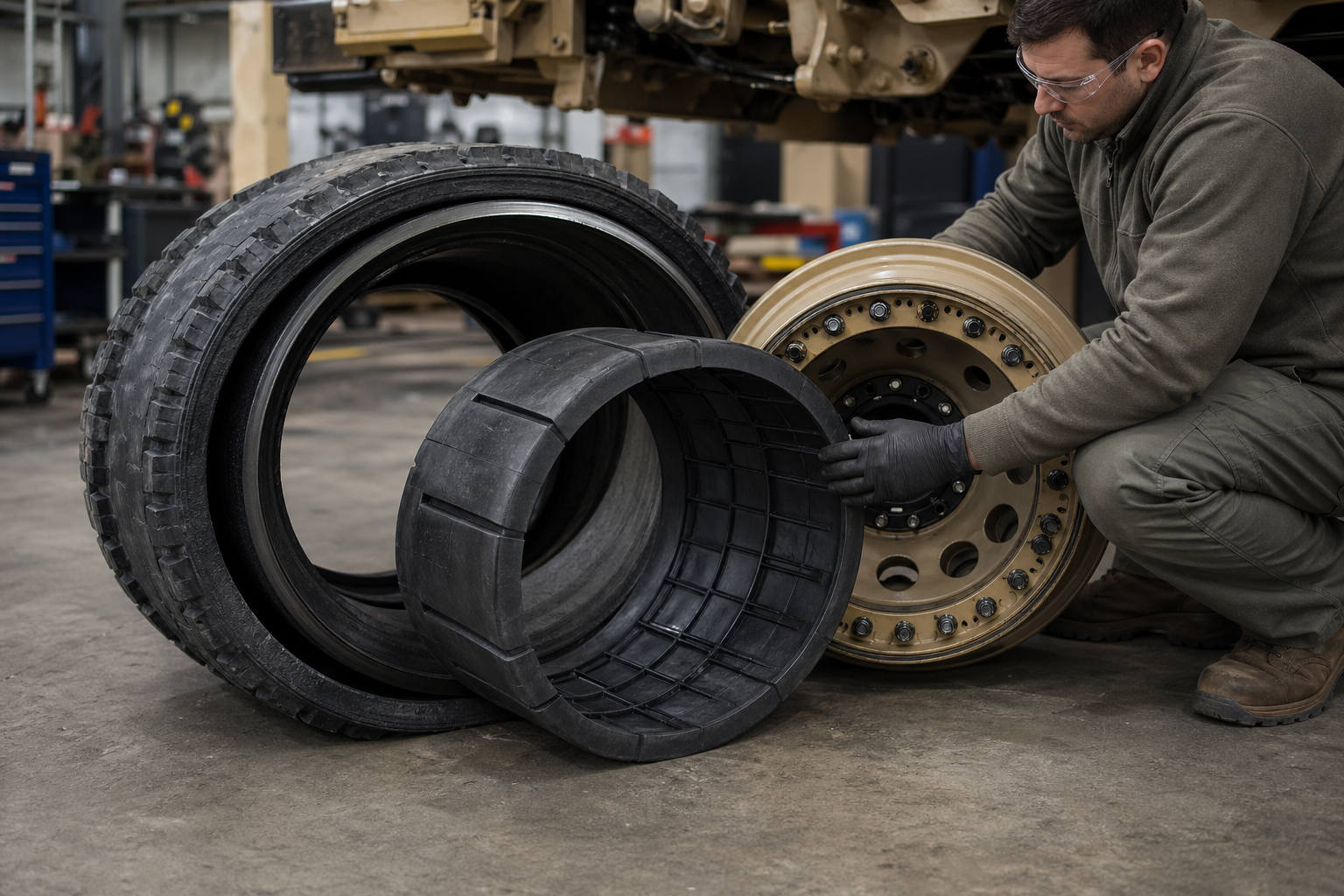
Run Flat Tire Inserts for Military Vehicles: Function, Maintenance, and Service Considerations
Run flat tire inserts are central to many military and armored vehicle tire systems. This guide explains what run-flat inserts do, why they affect removal and installation workflows, and how specialized equipment supports military tire maintenance.
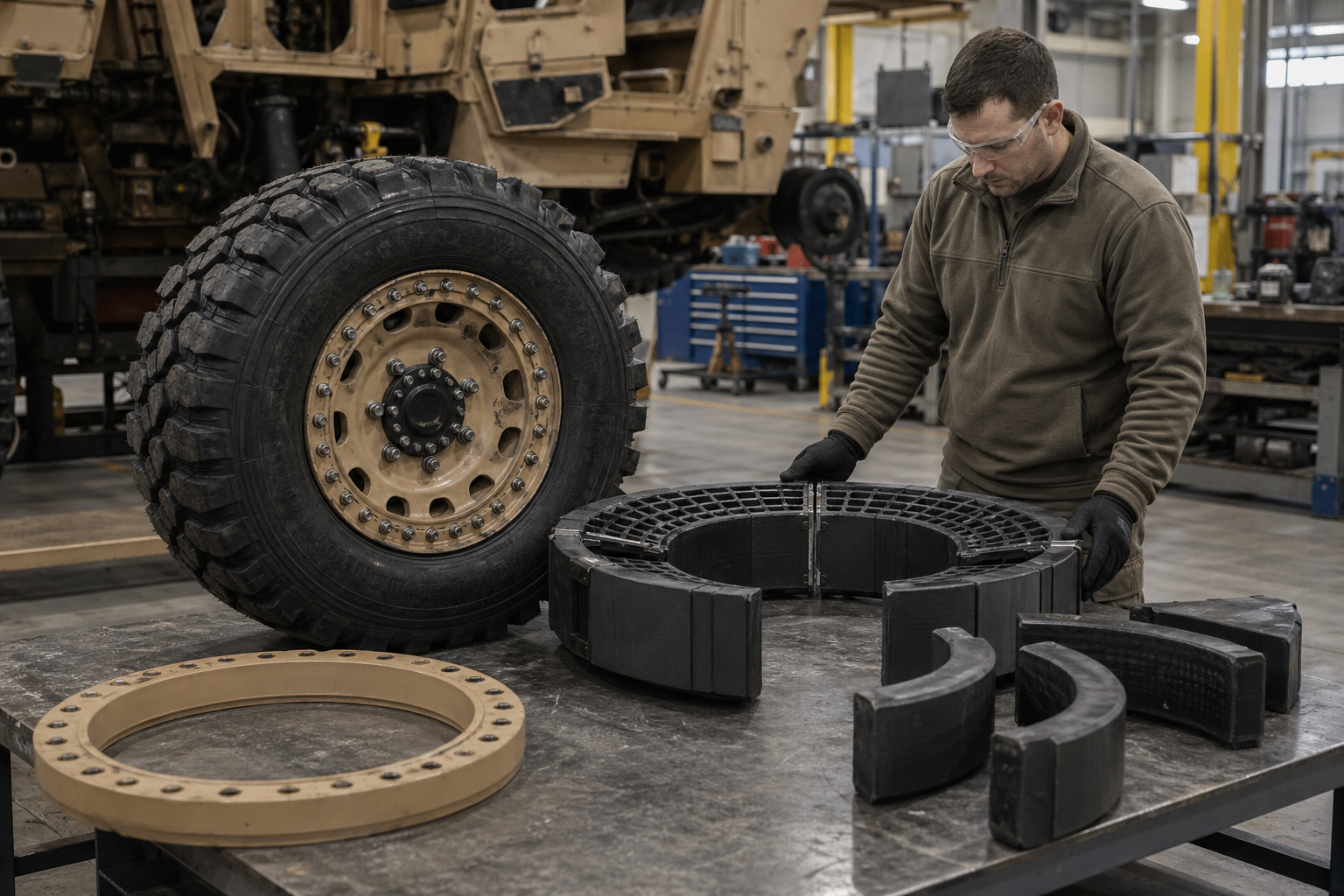
Hutchinson Run Flat Systems: Inserts, Installation, and Military Maintenance Context
Hutchinson run flat systems are closely connected to military tire inserts, installation workflows, and machine-assisted maintenance. This guide explains how Hutchinson run flat inserts fit into military tire assemblies and what maintenance teams should evaluate during removal, installation, and service planning.
Military Run Flat Assembly: Process, Equipment, and Maintenance Considerations
Military run flat assembly involves the controlled installation of the tire, internal insert, rim, and related wheel components used on military and armored vehicles. This guide explains how assembly connects to disassembly, insert handling, specialized equipment, and workshop, container, or trailer-based maintenance workflows.