Military Run Flat Assembly: Process, Equipment, and Maintenance Considerations
Military run flat assembly involves the controlled installation of the tire, internal insert, rim, and related wheel components used on military and armored vehicles. This guide explains how assembly connects to disassembly, insert handling, specialized equipment, and workshop, container, or trailer-based maintenance workflows.
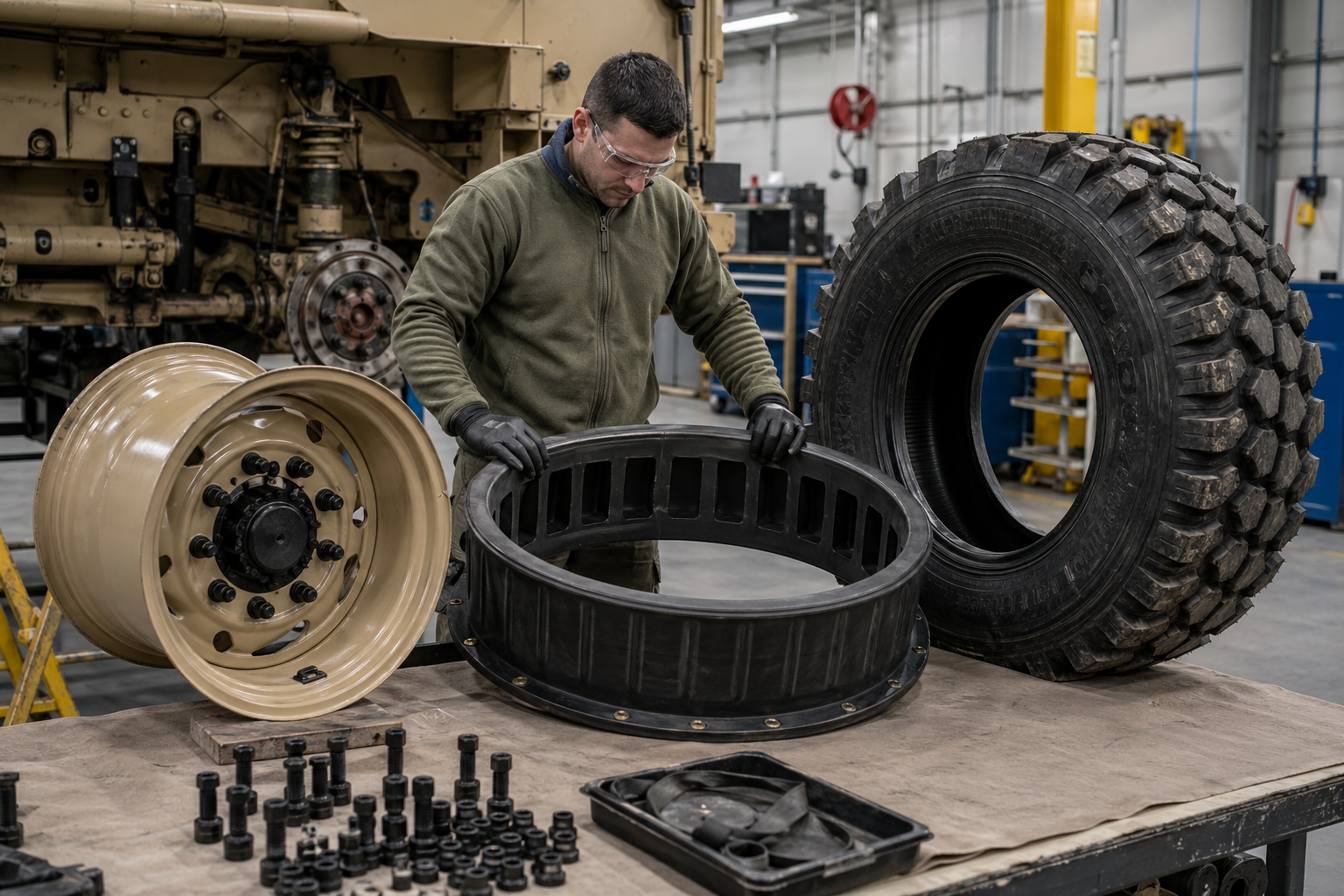
Military run flat assembly is the process of putting together the tire, internal run-flat insert, rim, and related wheel components used on military, tactical, and armored vehicles. It is closely connected to disassembly, insert handling, inspection, and machine-supported tire maintenance.
For maintenance teams, assembly is not simply the final step after tire removal. It is a technical workflow that affects fitment, repeatability, operator control, and the serviceability of the complete wheel assembly.
This guide explains how military run flat assembly works, why inserts and rims matter, how assembly connects to disassembly, and what teams should evaluate before selecting a machine-supported workflow. The broader guide to military run flat tires provides useful background before reviewing assembly-specific considerations.
What Is Military Run Flat Assembly?
Military run flat assembly refers to the process of assembling a military run-flat tire system. This may include the tire casing, run-flat insert, rim, bead interface, locking components, and other wheel assembly parts.
A complete military tire assembly may include:
- outer tire casing
- internal run-flat insert
- rim or wheel structure
- beadlock or locking components
- valve and inflation hardware
- platform-specific fitment requirements
- inspection and reassembly steps
The phrase military tire assembly is often used by maintenance teams, technical evaluators, and procurement researchers who are looking at the complete wheel system rather than the tire alone.
Because military run-flat tire assemblies can be heavy and complex, assembly should be handled as part of a controlled maintenance workflow.
For a deeper look at the insert component, review this guide to run flat tire inserts.
Why Assembly Is More Than Tire Installation
A standard tire installation process usually focuses on fitting a tire onto a rim. Military run-flat assembly is more complex because the internal insert and wheel structure must also be considered.
The assembly process may involve:
- preparing the rim
- positioning the tire
- aligning the run-flat insert
- controlling the insertion process
- managing heavy tire and wheel components
- checking fitment
- preparing the assembly for inflation or final inspection
This is why terms like military run flat assemble and run flat assembly often indicate a technical maintenance search, not a general tire query.
The goal is not only to “put the tire back on.” The goal is to create a complete assembly that matches the intended vehicle platform and maintenance requirements.
How Military Run Flat Assembly Connects to Disassembly
Assembly and disassembly should be planned together. A team cannot evaluate one without understanding the other.
Military run flat disassembly usually involves opening or separating the wheel assembly so the tire, insert, rim, or related components can be inspected or serviced. Assembly then brings those components back together in a controlled sequence.
The relationship usually looks like this:
- wheel positioning
- bead separation
- insert exposure
- insert removal
- inspection
- insert reinstallation
- tire and rim reassembly
- final process checks
If disassembly is poorly controlled, assembly may become more difficult. If assembly requirements are not understood in advance, the team may select equipment that supports removal but not reinstallation.
For machine-side context, this guide on run flat disassembly for armored vehicles explains the removal side of the workflow in more detail.
The Role of Run-Flat Inserts in Assembly
The internal insert is one of the most important parts of the assembly process. It affects fitment, installation force, rim interaction, and operator workflow.
A run-flat insert may need to be:
- inspected before installation
- positioned correctly inside the tire
- aligned with the wheel structure
- handled with suitable equipment
- installed in a way that matches the tire and rim requirements
This is why assembly-focused content naturally connects to military run flat inserts, run flat tire inserts, and Hutchinson run flat installation.
Teams should avoid treating the insert as a small accessory. It is a structural component inside the full run-flat tire system.
For Hutchinson-specific maintenance context, review this guide to Hutchinson run flat systems.
Equipment Used in Military Run Flat Assembly
Military run-flat assembly may require equipment that can support heavy tire handling, insert positioning, and controlled reassembly.
A standard tire machine may not be enough if the assembly includes reinforced tire casings, internal inserts, or armored vehicle wheel structures.
Equipment considerations may include:
- tire positioning capability
- controlled force application
- insert handling support
- compatibility with rim structure
- support for heavy-duty assemblies
- operator control
- repeatable workflow
- workshop, container, or trailer deployment format
For a broader equipment overview, this guide to a run flat tire machine explains how specialized machines support run-flat tire service.
The run-flat tire changer system provides additional technical context for machine-supported workflows.
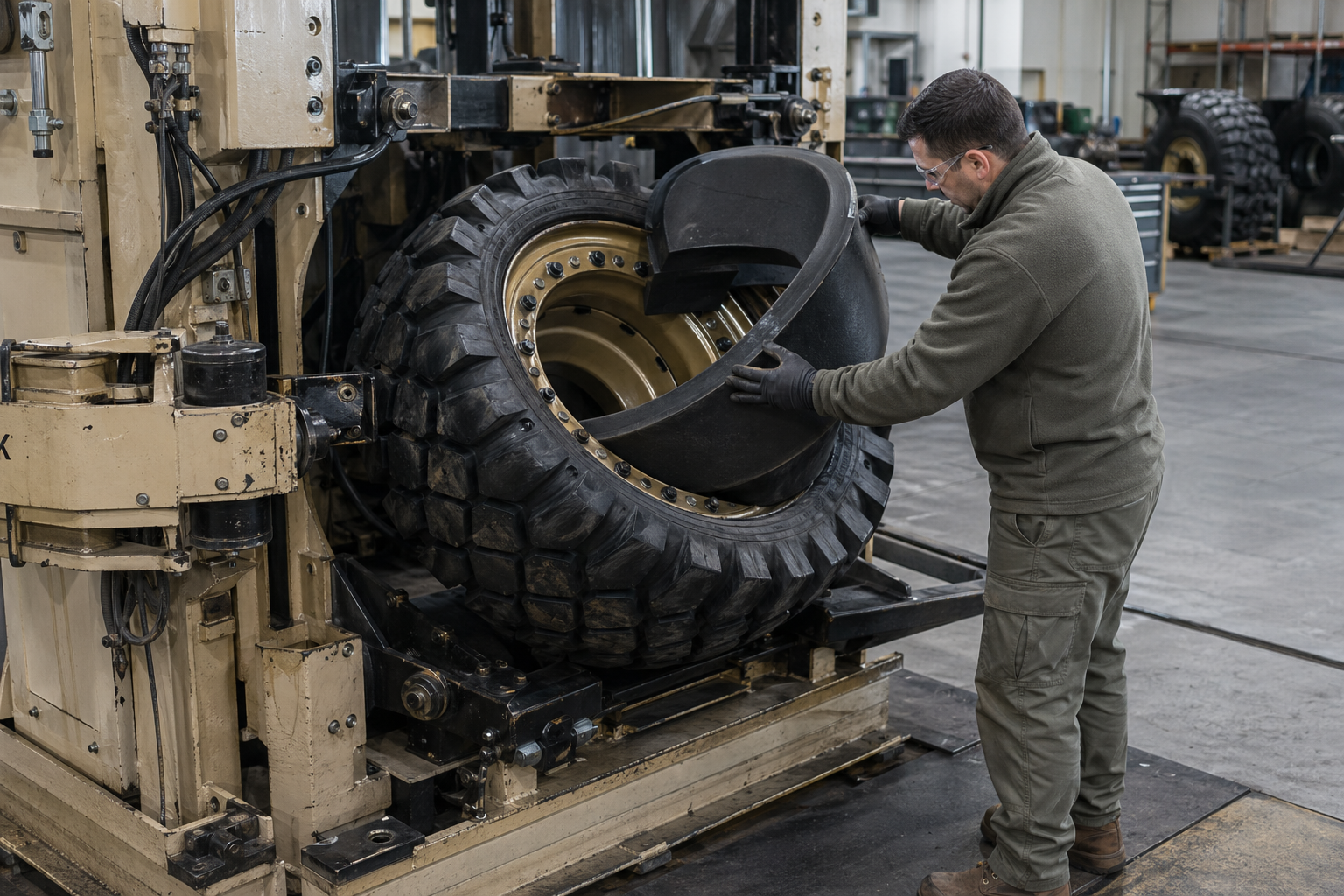
Main Stages of Military Run Flat Assembly
The exact process depends on the tire, insert, rim, and machine being used. However, the main stages usually include the following.
1. Rim and Component Preparation
Before assembly begins, the rim and related components should be inspected and prepared. This helps maintenance teams confirm that the assembly is ready for reinstallation.
Preparation may involve:
- checking the rim structure
- reviewing bead interface condition
- confirming component compatibility
- preparing valve or related hardware
- reviewing the insert and tire condition
2. Tire Positioning
The tire casing must be positioned correctly so the insert and rim can be assembled in a controlled sequence.
Because military tire assemblies can be heavy, positioning is a major part of the workflow.
3. Insert Alignment
The internal run-flat insert must be aligned with the tire and rim requirements. This is one of the most important technical stages.
Poor alignment can make assembly more difficult and may affect the repeatability of the process.
4. Controlled Insert Installation
The insert may require controlled force and positioning during installation. This is where specialized equipment can support the workflow.
A full run-flat removal and installation workflow helps show where insert positioning, tire handling, and reassembly fit into the same process.
5. Tire and Rim Reassembly
Once the insert is positioned, the tire and rim can be brought together according to the assembly requirements.
The machine should support a controlled and repeatable process.
6. Final Inspection and Workflow Check
After assembly, the maintenance team may inspect the tire, insert, rim, and related components before returning the assembly to service planning.
Workshop, Container, and Trailer Formats for Assembly Workflows
Military run-flat assembly can happen in different environments. The right equipment format depends on where maintenance takes place.
Workshop Format
A workshop setup is usually relevant for fixed maintenance facilities.
This may include:
- military depots
- base maintenance facilities
- contractor workshops
- MRO centers
- armored vehicle service centers
- centralized fleet maintenance locations
For fixed maintenance environments, the GMR-023 Workshop Model is the relevant machine configuration.
Container Format
A containerized setup can support deployable maintenance when teams need a structured environment closer to field operations.
It may be useful when:
- maintenance locations change
- equipment needs protected transportability
- tire service requires an organized environment
- field teams need more structure than an open setup
For deployable maintenance environments, the GMH-098 Container Model explains the container-based format.
Trailer Format
A trailer setup may support mobile maintenance teams that need to move between locations or support distributed fleets.
It may be useful when:
- service locations change
- the fleet operates across multiple sites
- mobile tire service capability is required
- a fixed workshop is not always available
For mobile assembly and tire service workflows, the GMT-099 Trailer Model is the trailer-based reference.
The military tire changers page also explains how workshop, container, and trailer formats differ.
What Maintenance Teams Should Evaluate Before Assembly
Before selecting a process or machine-supported setup, teams should evaluate the full tire system.
Tire and Rim Type
The tire casing and rim structure affect the assembly sequence. Multi-piece rims or reinforced structures may require more careful planning.
Insert Type
Different run-flat inserts may require different positioning and installation methods.
Vehicle Platform
The vehicle platform can influence tire size, load requirements, and wheel assembly structure.
Maintenance Environment
Assembly in a fixed workshop may differ from assembly in a containerized or trailer-based environment.
Operator Workflow
A repeatable process is important when multiple operators or rotating maintenance teams use the same equipment.
Documentation Requirements
Technical documentation may be needed by procurement researchers, defense contractors, or maintenance supervisors before selecting equipment.
Compatibility With Future Fleet Needs
If the fleet may change over time, machine flexibility and documentation become more important.
Common Mistakes in Military Run Flat Assembly Planning
Mistake 1: Treating Assembly as the Reverse of Removal
Assembly has its own requirements. The insert, tire, and rim must be aligned and reassembled correctly, not simply put back in reverse order.
Mistake 2: Ignoring Insert Positioning
The insert is central to the system. Poor planning around insert handling can complicate the workflow.
Mistake 3: Selecting Equipment Only by Tire Size
Tire diameter and weight matter, but insert type, rim structure, and vehicle platform also affect assembly.
Mistake 4: Overlooking Deployment Environment
A process that works in a fixed workshop may need adaptation for field, container, or trailer environments.
Mistake 5: Underestimating Training and Documentation
Military tire assembly should be repeatable. Training and documentation help support consistent operator workflow.
How Military Run Flat Assembly Supports Maintenance Planning
Military run-flat assembly is part of a larger maintenance system. It connects disassembly, insert handling, inspection, reinstallation, and deployment planning.
A complete maintenance plan should connect:
- tire system knowledge
- insert handling
- rim structure
- machine capability
- workshop or field environment
- operator workflow
- documentation
- vehicle platform requirements
This is why assembly-focused content is important for both SEO and technical evaluation. It helps bridge informational searches around military tires with more specific machine-supported maintenance workflows.
For readers comparing complete maintenance setups, this guide to a military run flat machine explains workshop, container, and trailer deployment formats.
Final Considerations
Military run flat assembly should be planned as a controlled technical workflow. It involves more than fitting a tire onto a rim. The process may include insert positioning, rim preparation, tire alignment, reassembly, and inspection.
The right approach depends on the tire, insert, rim structure, vehicle platform, maintenance environment, operator workflow, and equipment used.
For technical details on run-flat installation, removal, split-rim handling, and machine-supported maintenance workflows, the run-flat removal and installation process is the most relevant supporting reference.
Questions Answered
What is military run flat assembly?
Military run flat assembly is the process of putting together a military run-flat tire system, including the tire, internal insert, rim, and related wheel components.
How is military run flat assembly different from standard tire installation?
Military run flat assembly may involve internal inserts, reinforced tire casings, heavy wheel structures, and platform-specific requirements that make it more complex than standard tire installation.
What is military tire assembly?
Military tire assembly refers to the complete tire, insert, rim, and wheel system used on military or tactical vehicles.
Why do run-flat inserts matter during assembly?
Run-flat inserts affect fitment, alignment, installation force, and the overall maintenance workflow. They are central components inside many military run-flat tire systems.
What is the relationship between military run flat assembly and disassembly?
Disassembly opens or separates the tire system for inspection or service. Assembly brings the tire, insert, and rim components back together in a controlled workflow.
What should teams evaluate before selecting assembly equipment?
Teams should evaluate tire size, rim structure, insert type, vehicle platform, maintenance location, operator workflow, documentation, and deployment format.
Continue Through The Archive
The related grid below follows the same redesigned editorial system as the main blog landing page.
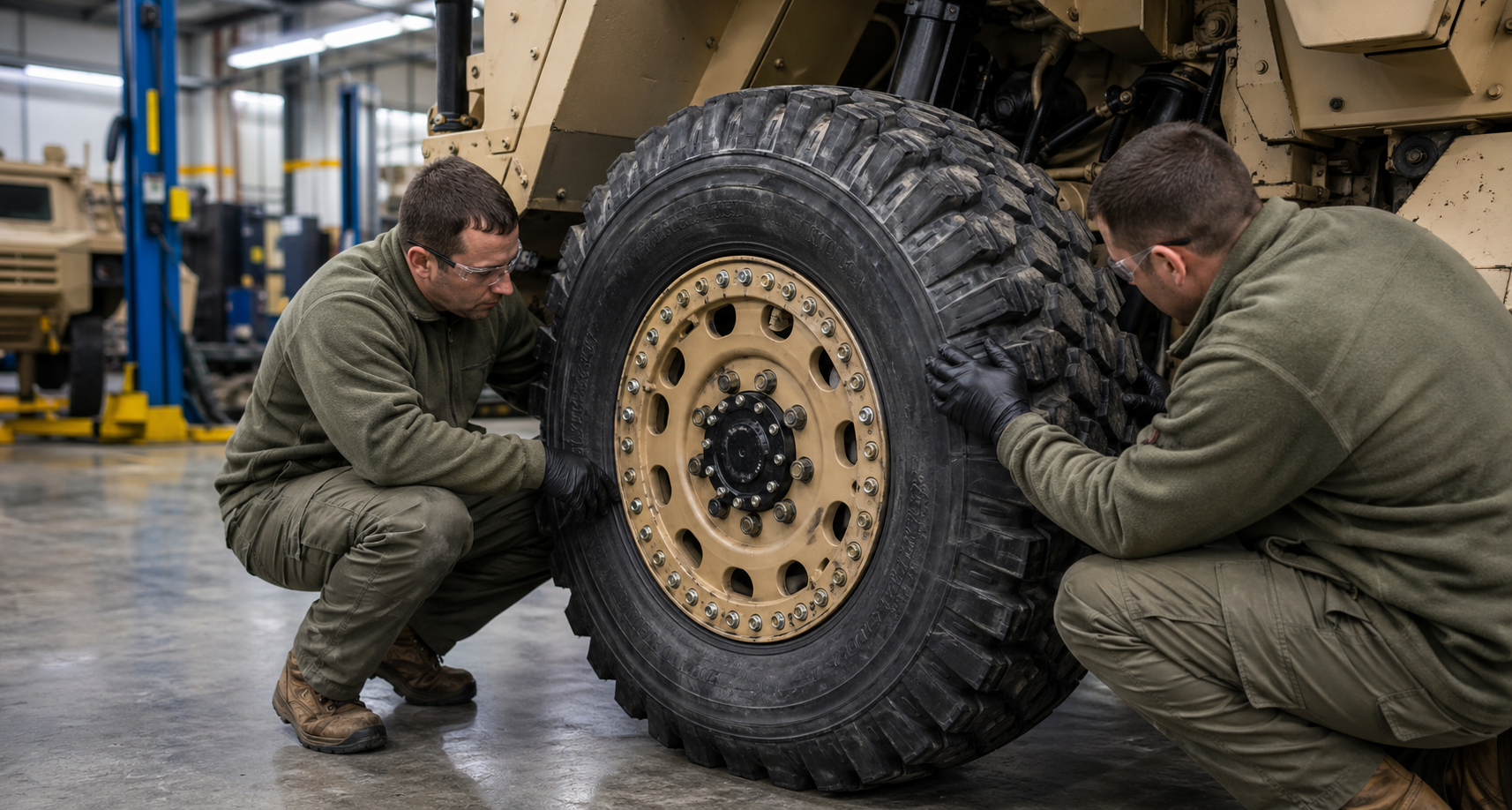
Military Run Flat Tires: Systems, Inserts, and Maintenance Considerations
Military run flat tires are part of a complete tire, insert, rim, and maintenance system used on tactical and armored vehicles. This guide explains how military run flats work, why run-flat inserts matter, and how specialized tire changers support controlled removal, installation, and maintenance workflows.
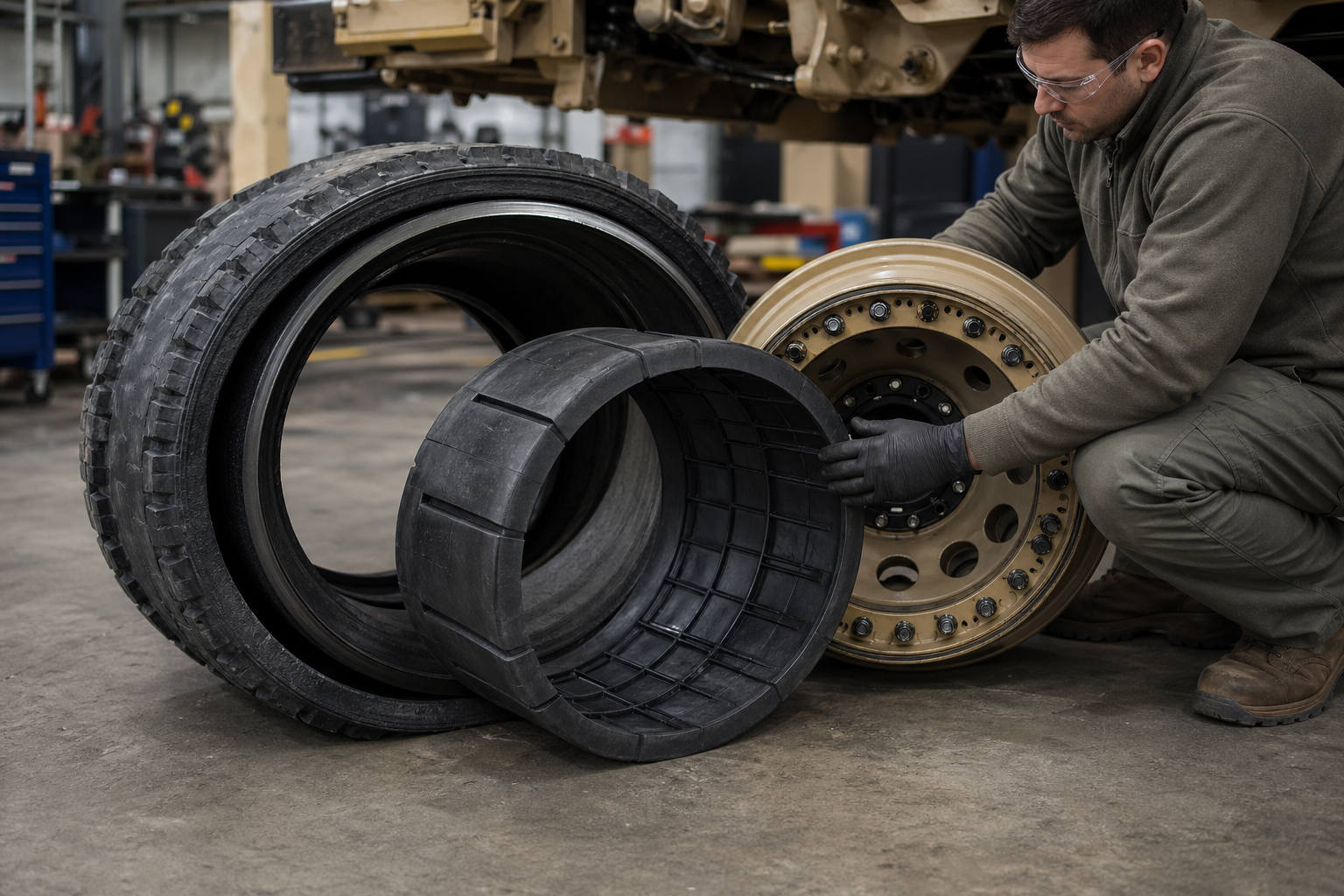
Run Flat Tire Inserts for Military Vehicles: Function, Maintenance, and Service Considerations
Run flat tire inserts are central to many military and armored vehicle tire systems. This guide explains what run-flat inserts do, why they affect removal and installation workflows, and how specialized equipment supports military tire maintenance.
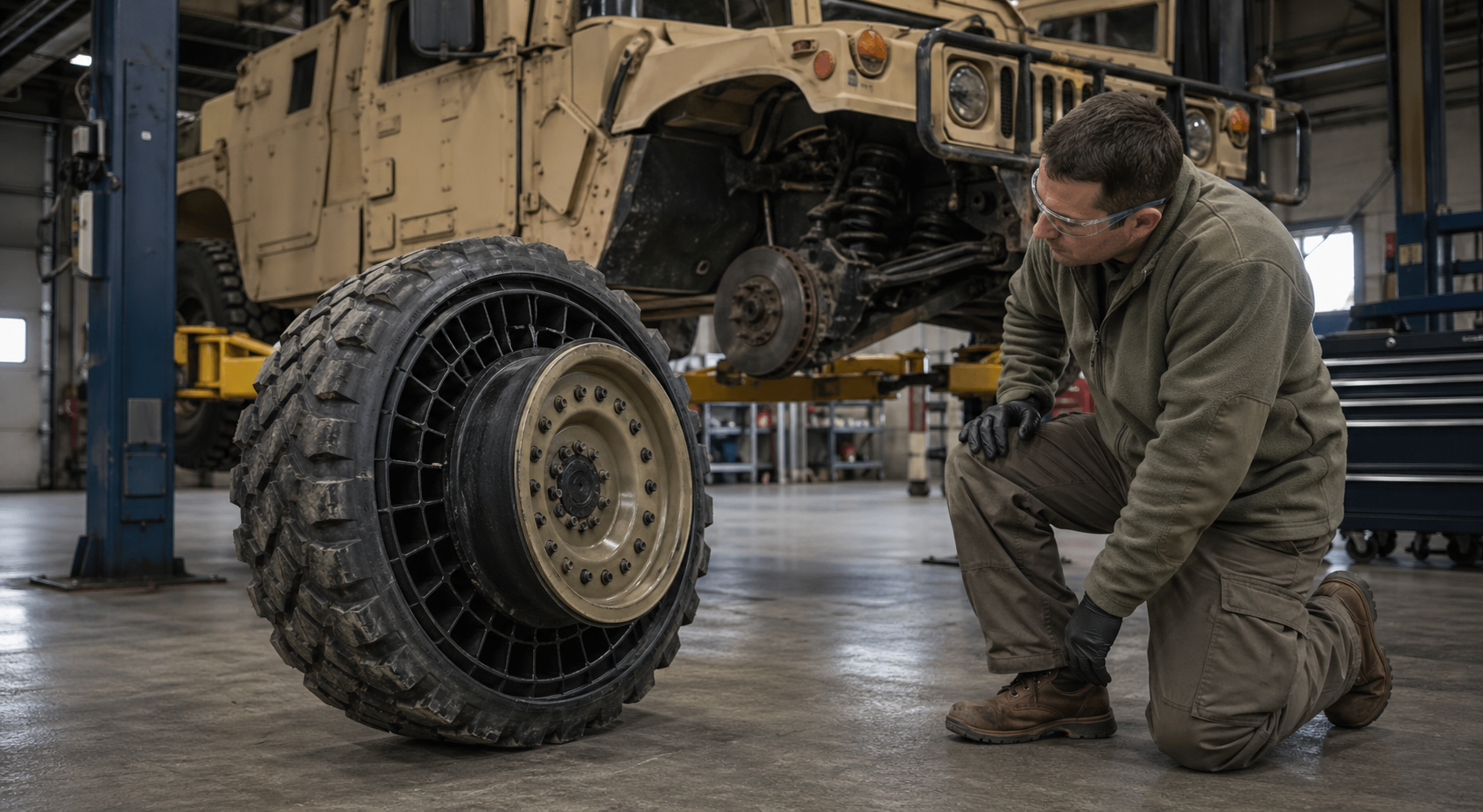
Humvee Run Flat Inserts: Military Tire Maintenance and Service Considerations
Humvee run flat inserts are internal support components inside certain military Humvee tire assemblies. This guide explains how they affect tire maintenance, what teams should evaluate beyond tire size, and how machine-supported workflows can support removal, inspection, and reassembly.