Humvee Run Flat Inserts: Military Tire Maintenance and Service Considerations
Humvee run flat inserts are internal support components inside certain military Humvee tire assemblies. This guide explains how they affect tire maintenance, what teams should evaluate beyond tire size, and how machine-supported workflows can support removal, inspection, and reassembly.
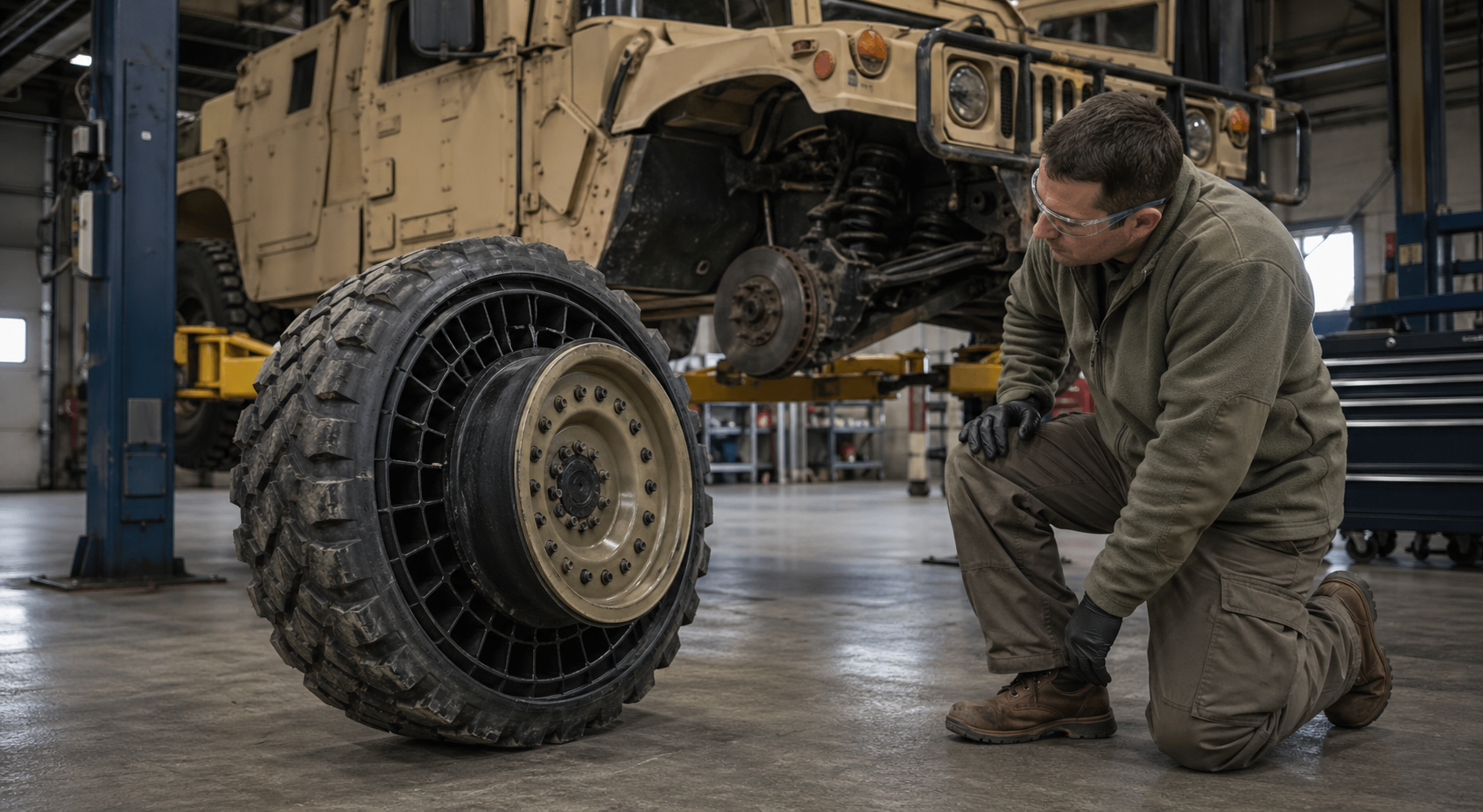
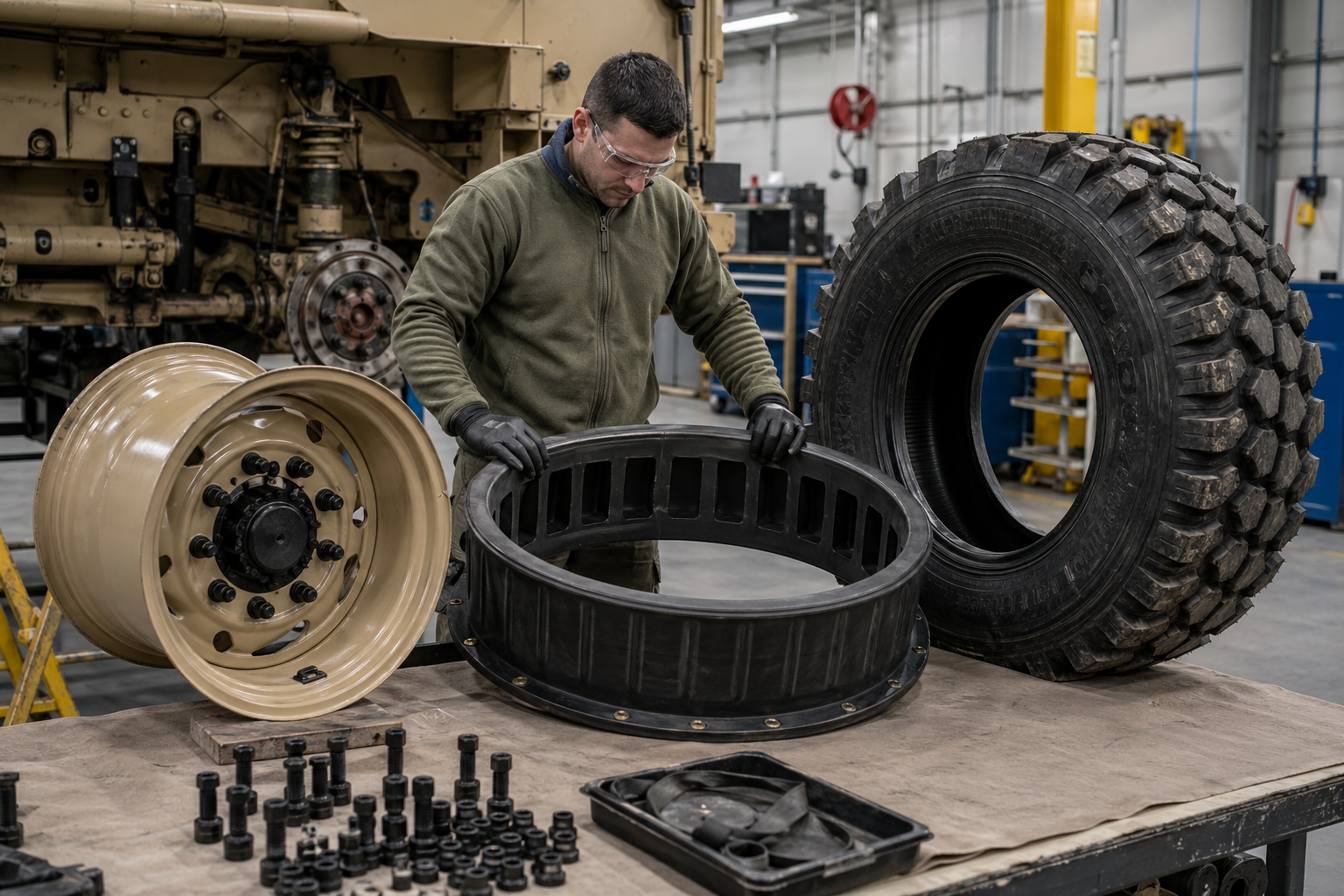
Humvee run flat inserts are an important part of the tire and wheel assemblies used on many military Humvee and HMMWV-related platforms. For maintenance teams, the insert is not just a hidden component inside the tire. It affects how the tire assembly is removed, inspected, serviced, reassembled, and supported through the correct maintenance workflow.
Humvee tire systems are often researched by users asking questions such as what size tires are on a military Humvee, what tires do military Humvees use, or how military humvee tires are maintained. Those questions are useful starting points, but for maintenance planning, the bigger issue is how the full tire, rim, and insert assembly is serviced.
This guide explains how Humvee run flat inserts fit into military tire assemblies, why insert handling matters, what maintenance teams should evaluate, and how machine-assisted workflows can support tire service planning. For a broader overview of military tire systems, start with this guide to military run flat tires.
What Are Humvee Run Flat Inserts?
Humvee run flat inserts are internal support components used inside certain Humvee tire assemblies. Their purpose is to support continued vehicle movement after tire pressure loss or damage, depending on the system design, vehicle load, and operating conditions.
A complete Humvee tire assembly may include:
- tire casing
- internal run-flat insert
- rim or wheel structure
- locking or bead-related components
- valve and inflation hardware
- platform-specific fitment requirements
- maintenance and inspection procedures
The insert is positioned inside the tire assembly, which means it directly affects service procedures. Maintenance teams may need to remove, inspect, reinstall, or replace the insert depending on the condition of the tire and wheel assembly.
For a broader explanation of insert function, review this guide to run flat tire inserts.
Why Military Humvee Tires Require a Full Assembly View
The keyword military humvee tires often attracts users looking for tire size, tire type, or replacement information. However, maintenance teams should look at the full assembly rather than only the tire itself.
A military Humvee tire setup may involve:
- tire size and load rating
- rim structure
- run-flat insert type
- beadlock or locking components
- platform variation
- service environment
- removal and installation workflow
A tire size answer alone does not explain how the assembly is serviced. Two tire assemblies may look similar from the outside but require different handling depending on the rim, insert, or platform configuration.
This is why Humvee tire maintenance should connect the tire, insert, rim, vehicle platform, and equipment used during service.
For additional Humvee-specific tire context, the Military Humvee & Run-Flat Tire Solutions article connects vehicle-level tire requirements with run-flat maintenance considerations.
What Size Tires Are on a Military Humvee?
The question what size tires are on a military Humvee is common because users often begin their research with tire dimensions.
However, the exact tire size can vary depending on vehicle variant, wheel configuration, tire supplier, operational setup, and modification history. For maintenance planning, tire size should be confirmed against the actual vehicle and wheel assembly being serviced.
Instead of relying on one generic answer, maintenance teams should verify:
- vehicle variant
- wheel and rim configuration
- tire markings
- load requirements
- run-flat insert type
- technical documentation
- whether the tire assembly has been modified
This is especially important when the tire assembly includes run-flat inserts. The insert affects removal and installation, so size alone is not enough to define the maintenance requirement.
When tire size research moves into service planning, the run-flat tire changer system helps connect tire dimensions, insert handling, and machine-supported maintenance.
What Tires Do Military Humvees Use?
The question what tires do military Humvees use also needs careful handling. Military Humvees may use tires suited to tactical mobility, load requirements, off-road terrain, and operational vehicle configurations.
However, from a maintenance perspective, the most important point is not only the tire brand or size. It is the complete tire assembly.
Maintenance teams should consider:
- tire construction
- rim structure
- run-flat insert type
- vehicle load
- service environment
- removal and installation needs
- operator workflow
- available equipment
When a Humvee tire assembly includes a run-flat insert, the maintenance process becomes more specialized than ordinary tire service.
This is why Humvee-related tire content should connect naturally to run flat tire inserts, military run flat inserts, and machine-supported maintenance workflows.
How Humvee Run Flat Inserts Affect Tire Maintenance
Humvee run flat inserts affect maintenance because they sit inside the tire and interact with the rim and tire casing.
During service, the insert may need to be:
- accessed
- removed
- inspected
- cleaned
- replaced
- reinstalled
- aligned during reassembly
This makes the maintenance workflow more complex than conventional tire replacement.
Insert handling can affect:
- tire removal difficulty
- rim access
- operator effort
- equipment selection
- service time planning
- reassembly workflow
- training requirements
For this reason, a maintenance team should not treat a Humvee run-flat tire as a standard tire. The insert and wheel assembly should be considered from the start.
The full run-flat removal and installation workflow shows how insert access, removal, and reassembly fit into a machine-assisted service sequence.
Military Tire Assembly: Why the Rim and Insert Matter
A Humvee tire should be understood as part of a military tire assembly. The assembly includes the tire, insert, rim, and related wheel components.
The rim and insert are important because they affect how the tire is removed and reassembled.
Maintenance teams should evaluate:
- whether the rim is multi-piece
- how the insert is positioned
- whether beadlock or locking elements are present
- how the tire casing interacts with the rim
- whether a standard tire machine can support the process
- whether a run-flat-specific machine is required
A complete assembly view helps teams avoid treating the tire as a simple replacement item.
For a deeper discussion of assembly workflows, review this guide to military run flat assembly.
Equipment Used for Humvee Run Flat Insert Service
Humvee run flat insert service may require equipment capable of supporting tire positioning, bead separation, insert access, insert removal, and controlled reassembly.
A standard tire changer may not always be suitable if the assembly includes a heavy-duty rim, internal insert, or reinforced tire structure.
Equipment evaluation should include:
- tire size and rim compatibility
- run-flat insert handling capability
- operator control
- support for removal and installation
- workshop or field deployment needs
- documentation and training support
- compatibility with the actual vehicle fleet
For teams evaluating specialized machines, this guide to a run flat tire machine explains the broader equipment category.
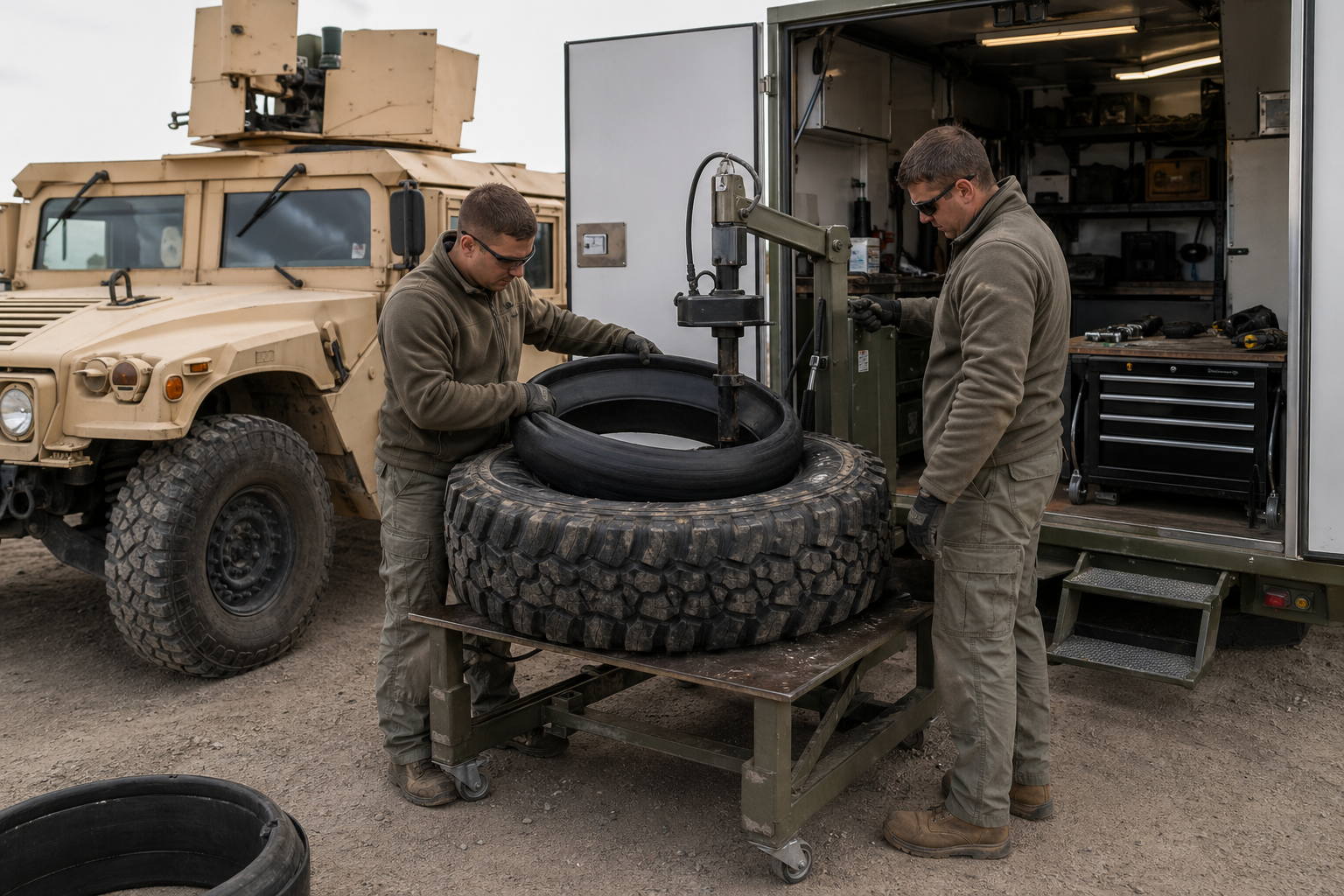
Workshop, Container, and Trailer Maintenance Options
Humvee tire service may happen in different environments. The right setup depends on the organization’s maintenance model.
Workshop Maintenance
A workshop setup may be relevant when Humvee tire assemblies are serviced in a fixed facility such as a depot, base, contractor workshop, or vehicle maintenance center.
A workshop setup may make sense when:
- maintenance is centralized
- tire service happens regularly in one location
- operators use a stable maintenance bay
- repeatable workflow is important
For workshop-based service, the GMR-023 Workshop Model is a relevant reference.
Container-Based Maintenance
A containerized setup may be useful when teams need a structured but deployable maintenance environment.
It may be relevant when:
- maintenance locations change
- equipment needs protected transportability
- field service requires organization
- the team needs a semi-mobile support model
For container-based service, the GMH-098 Container Model provides the deployable configuration context.
Trailer-Based Maintenance
A trailer setup may be useful when maintenance capability needs to move between sites or support distributed vehicle operations.
It may be relevant when:
- the fleet operates across multiple locations
- a fixed workshop is not always available
- mobile maintenance is required
- tire service capability needs to stay closer to vehicles
For mobile service, the GMT-099 Trailer Model covers the trailer-based format.
The military tire changers page also explains how these deployment formats differ.
Common Mistakes in Humvee Tire Maintenance Planning
Mistake 1: Asking Only About Tire Size
Tire size is important, but it does not fully define the maintenance workflow. The rim, insert, and vehicle configuration also matter.
Mistake 2: Treating the Insert as a Minor Component
The insert is central to the run-flat system. It affects removal, installation, inspection, and equipment selection.
Mistake 3: Assuming Standard Tire Equipment Is Always Enough
A standard tire changer may not support internal insert handling or reinforced military tire assemblies.
Mistake 4: Ignoring Platform Variation
Humvee variants, wheel setups, and operational configurations may vary. Teams should verify the actual assembly being serviced.
Mistake 5: Overlooking Field vs Workshop Needs
A fixed workshop may be enough for some teams. Others may need container or trailer-based capability depending on where tire service happens.
How Humvee Run Flat Inserts Fit Into Broader Military Tire Maintenance
Humvee run flat inserts are one part of a broader military tire maintenance ecosystem.
They connect to:
- military run flat tires
- run flat tire inserts
- military tire assembly
- machine-supported removal
- machine-supported installation
- workshop maintenance
- mobile field maintenance
- vehicle-specific service planning
This makes Humvee-related content useful for SEO, but only when it stays connected to tire systems and maintenance workflows. A generic Humvee vehicle article would attract broad curiosity traffic. A Humvee run-flat insert article attracts a more relevant technical audience.
For teams comparing broader military tire service equipment, the run-flat tire changer system provides the main technical reference.
Final Considerations
Humvee run flat inserts should be evaluated as part of the full tire, rim, insert, and vehicle maintenance system. Tire size and tire type matter, but they are only part of the maintenance picture.
Teams should confirm the actual vehicle variant, wheel assembly, rim structure, insert type, service location, and equipment workflow before planning tire maintenance.
For technical information on Humvee run-flat tire context, machine-supported service, and removal/installation workflows, the Military Humvee & Run-Flat Tire Solutions article is the most relevant supporting reference.
Questions Answered
What are Humvee run flat inserts?
Humvee run flat inserts are internal support components used inside certain Humvee tire assemblies. They help support the tire system after pressure loss depending on the vehicle, load, and run-flat system design.
What size tires are on a military Humvee?
The exact tire size can vary depending on the Humvee variant, wheel configuration, tire supplier, and operational setup. Maintenance teams should confirm tire size from the actual vehicle and technical documentation.
What tires do military Humvees use?
Military Humvees may use tires selected for tactical mobility, load requirements, terrain, and vehicle configuration. The complete tire assembly may also include a run-flat insert and specific rim structure.
Are Humvee run flat inserts serviced like standard tire parts?
Not usually. Because the insert is inside the tire assembly, maintenance may require specialized removal, inspection, and installation procedures.
Why do run-flat inserts matter in Humvee tire maintenance?
Run-flat inserts affect tire removal, rim access, equipment selection, reassembly, and operator workflow. They are central to the maintenance process.
What equipment is used to service Humvee run flat inserts?
Equipment may include a run-flat tire machine or military tire changer designed to support tire positioning, insert access, removal, installation, and controlled reassembly.
Continue Through The Archive
The related grid below follows the same redesigned editorial system as the main blog landing page.
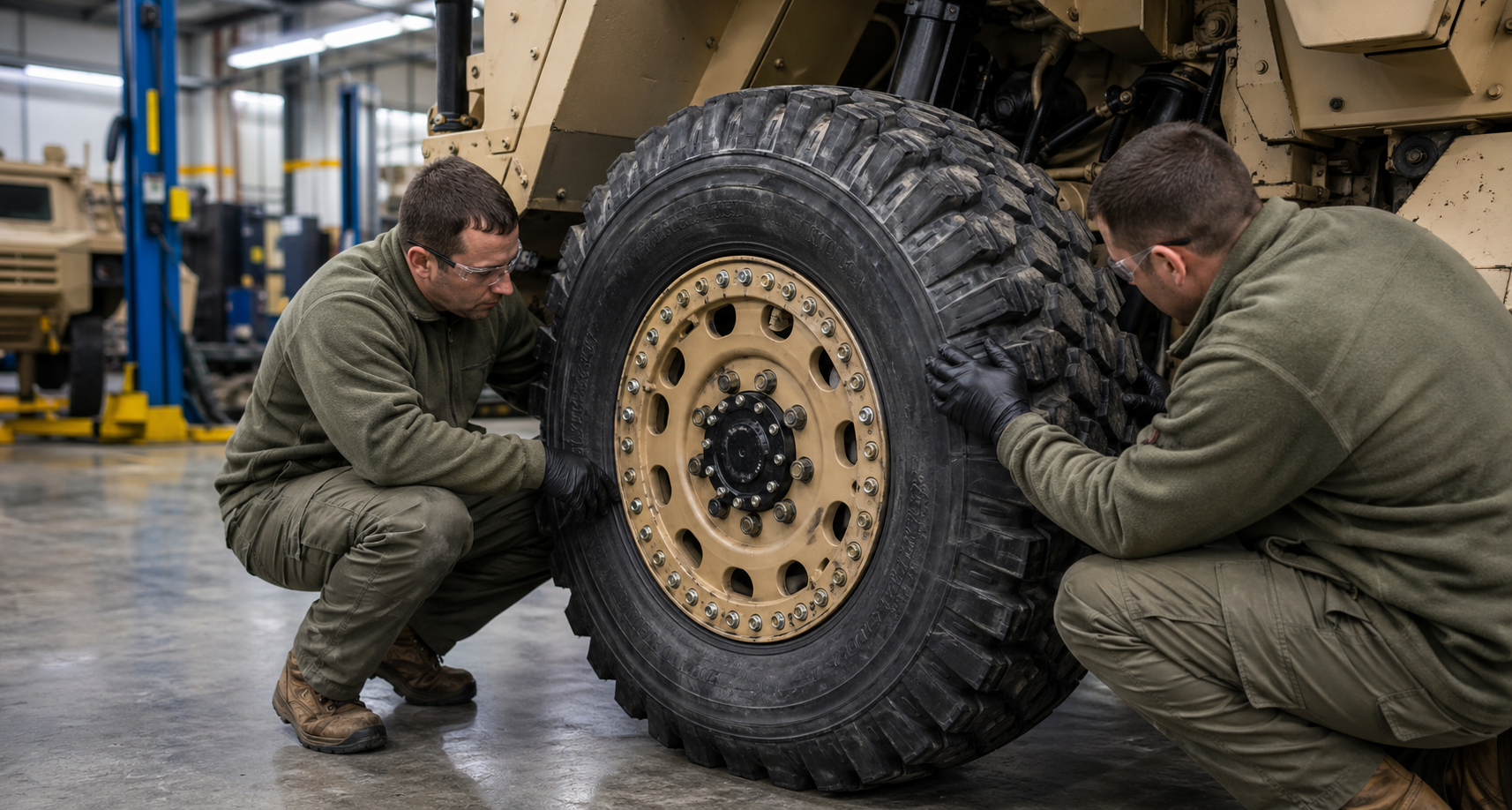
Military Run Flat Tires: Systems, Inserts, and Maintenance Considerations
Military run flat tires are part of a complete tire, insert, rim, and maintenance system used on tactical and armored vehicles. This guide explains how military run flats work, why run-flat inserts matter, and how specialized tire changers support controlled removal, installation, and maintenance workflows.
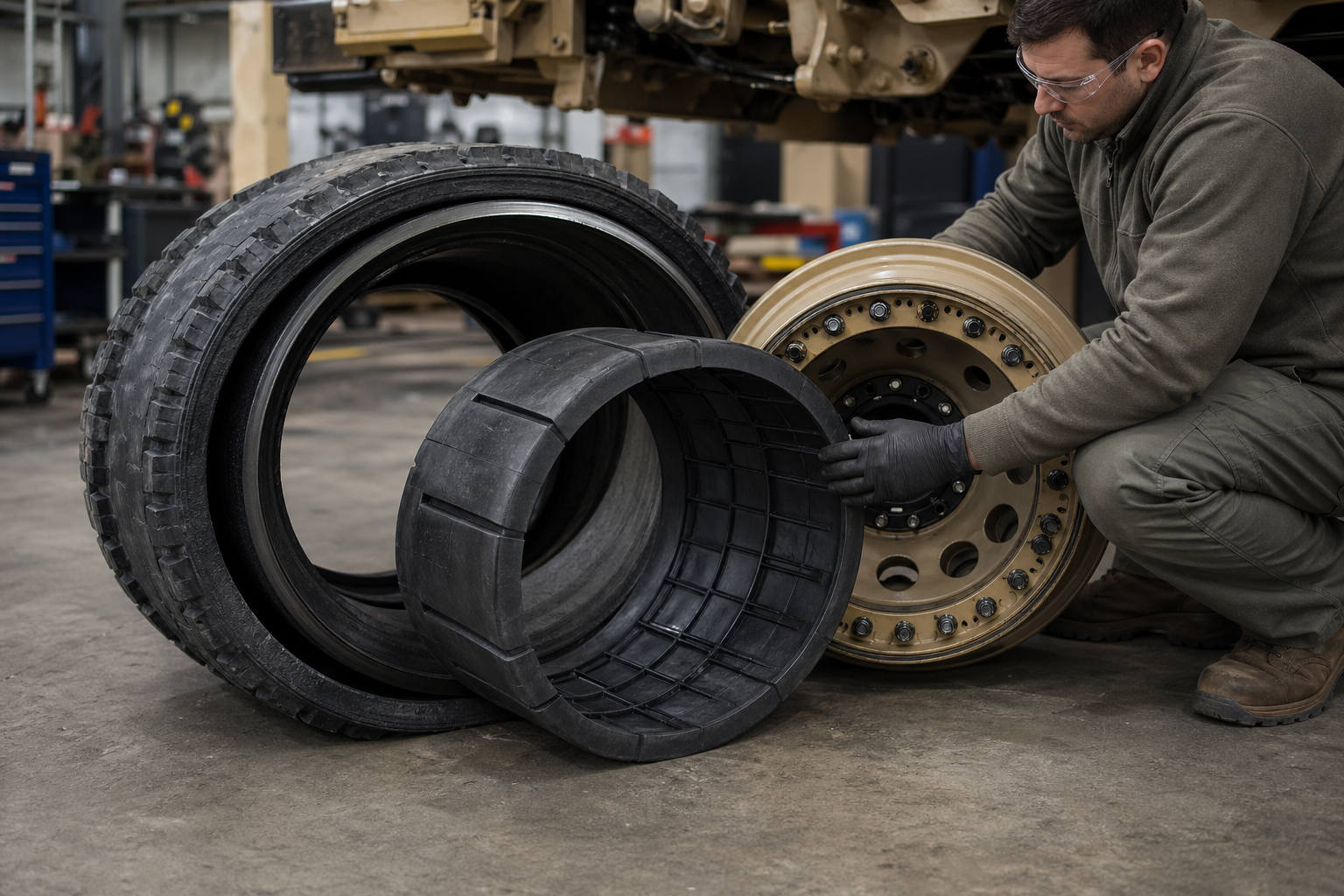
Run Flat Tire Inserts for Military Vehicles: Function, Maintenance, and Service Considerations
Run flat tire inserts are central to many military and armored vehicle tire systems. This guide explains what run-flat inserts do, why they affect removal and installation workflows, and how specialized equipment supports military tire maintenance.
Military Run Flat Assembly: Process, Equipment, and Maintenance Considerations
Military run flat assembly involves the controlled installation of the tire, internal insert, rim, and related wheel components used on military and armored vehicles. This guide explains how assembly connects to disassembly, insert handling, specialized equipment, and workshop, container, or trailer-based maintenance workflows.