Hutchinson Run Flat Systems: Inserts, Installation, and Military Maintenance Context
Hutchinson run flat systems are closely connected to military tire inserts, installation workflows, and machine-assisted maintenance. This guide explains how Hutchinson run flat inserts fit into military tire assemblies and what maintenance teams should evaluate during removal, installation, and service planning.
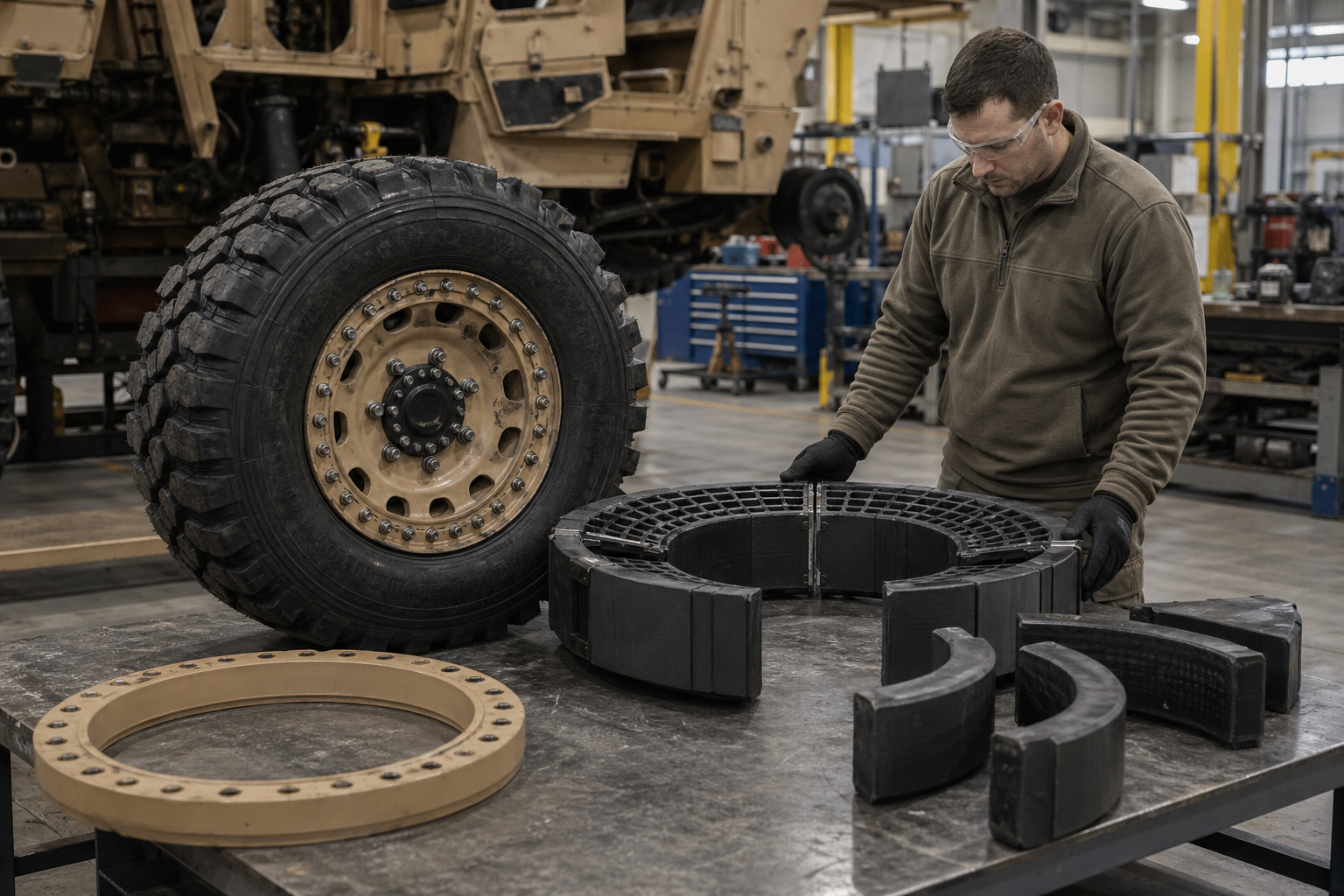
Hutchinson run flat systems are frequently discussed in military tire maintenance because they are closely connected to run-flat inserts, armored vehicle tire assemblies, and specialized removal and installation workflows. For maintenance teams, procurement researchers, defense contractors, and technical evaluators, Hutchinson-related searches often indicate a need to understand the full tire system rather than the tire alone.
A Hutchinson run flat system may involve the tire, rim, internal insert, wheel structure, and the equipment used to service the assembly. This makes the topic relevant not only to tire selection, but also to maintenance planning, operator workflow, and machine-supported run-flat service.
This guide explains how Hutchinson run flat systems fit into military tire maintenance, why inserts matter, what teams should consider during installation and removal, and how specialized equipment can support the service process. The broader context around military run flat tires is useful before reviewing Hutchinson-specific maintenance considerations.
What Is a Hutchinson Run Flat System?
A Hutchinson run flat system generally refers to a run-flat tire solution used inside military, armored, or tactical vehicle wheel assemblies. In practical maintenance terms, the system is not only a tire. It may include:
- the tire casing
- the internal run-flat insert
- the rim or wheel assembly
- locking or bead-related components
- fitment requirements
- removal and installation considerations
- maintenance documentation and workflow requirements
The phrase Hutchinson run flat tire system is often used by people researching how the complete assembly works, how the insert is installed, or how the system is serviced during military vehicle maintenance.
Because the insert is located inside the tire assembly, maintenance teams need to think about more than external tire condition. They also need to consider the full service workflow: removal, insert access, inspection, reinstallation, and reassembly.
A deeper process-focused reference is available in this Hutchinson runflat installation and removal guide, especially for maintenance teams comparing installation, removal, and insert-handling requirements.
Why Hutchinson Run Flat Inserts Matter
Hutchinson run flat inserts are a central part of the system. The insert helps support the vehicle after pressure loss depending on the tire system, vehicle weight, and operating conditions.
From a maintenance perspective, the insert matters because it changes the service process.
A team may need to:
- separate the tire from the rim
- expose the internal insert
- remove the insert
- inspect the insert and related components
- reinstall the insert
- reassemble the tire and rim
- verify the assembly according to technical requirements
This is why Hutchinson-related search intent often overlaps with run flat tire inserts, military run flat inserts, and machine-assisted service workflows.
For a broader insert-focused article, review this guide on run flat tire inserts.
Hutchinson Run Flat Installation: What Maintenance Teams Should Consider
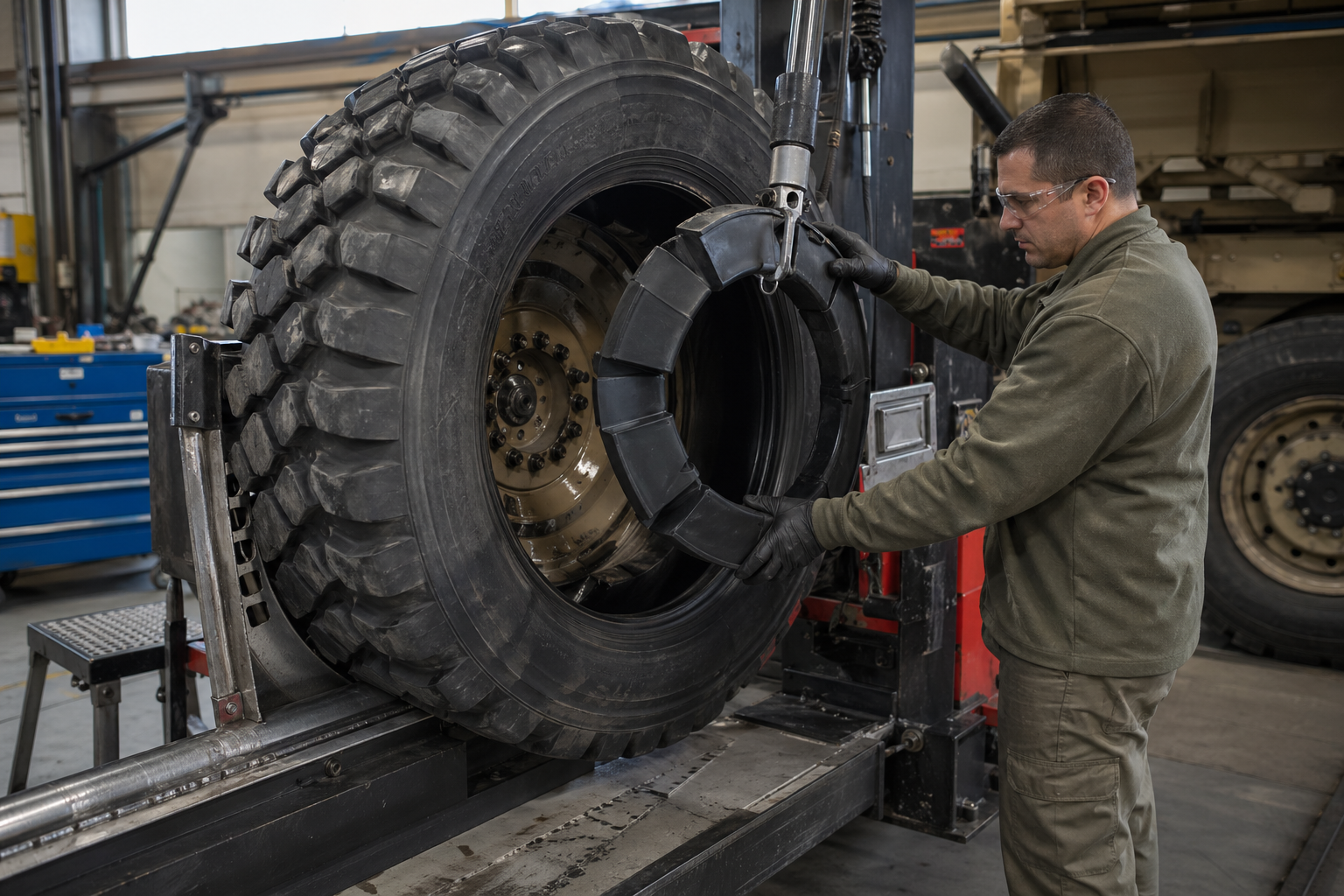
Hutchinson run flat installation requires careful attention to the full assembly. The process is not only about putting an insert into a tire. It involves tire structure, insert design, rim configuration, alignment, force application, and operator workflow.
Maintenance teams should evaluate:
- tire and rim compatibility
- insert type
- vehicle platform
- wheel assembly structure
- workshop or field maintenance environment
- available equipment
- operator training
- documentation requirements
The installation process can vary depending on the exact tire and insert configuration. For that reason, teams should avoid assuming that all run-flat systems are installed in the same way.
A machine-supported workflow may help teams manage the process more consistently, especially when assemblies are heavy, rigid, or difficult to position manually.
The full run-flat removal and installation workflow is useful for understanding how tire positioning, insert handling, split-rim work, and reassembly fit together.
Removal and Disassembly in Hutchinson Run Flat Maintenance
Removal is one of the most important stages in Hutchinson run flat maintenance. The insert is positioned inside the tire assembly, so operators typically need to access it through a controlled disassembly process.
The workflow may involve:
- positioning the wheel assembly
- separating the tire from the rim
- exposing the run-flat insert
- removing the insert
- inspecting the tire, insert, and rim
- preparing the assembly for reinstallation
The term military run flat disassembly is often used by searchers who are trying to understand this process. In practice, removal and disassembly should be evaluated according to the specific tire system and maintenance environment.
A dedicated run-flat tire changer system can help frame this process from the equipment side, especially where controlled positioning and force application matter.
How Hutchinson Run Flat Systems Connect to Military Run Flat Tires
Hutchinson-related searches are often part of a broader research path around military run flat tires.
A user may begin by researching military run flats, then narrow the search into insert types, installation, disassembly, or compatible service equipment. This makes Hutchinson content valuable for SEO because it connects a branded technical term with the wider military tire maintenance ecosystem.
The connection usually looks like this:
- military tire requirement
- run-flat tire system
- internal insert
- installation and removal workflow
- machine-supported service process
- workshop, container, or trailer deployment setup
This is why Hutchinson run flat content should not be written like a generic product definition. It should explain how the system fits into maintenance, procurement, and vehicle service planning.
For readers comparing the broader system, this guide to military run flat tires provides the parent topic.
Equipment Considerations for Hutchinson Run Flat Maintenance
Not every tire machine is designed for run-flat insert service. Maintenance teams should evaluate equipment based on the actual assembly they need to service.
Important factors include:
Insert Handling
The equipment should support the insert removal and installation workflow, not only the outer tire.
Tire and Rim Structure
The rim, tire casing, and bead interface can affect how the system is disassembled and reassembled.
Vehicle Platform
Tire assemblies may vary by vehicle type. A machine should be evaluated against the actual fleet requirements.
Maintenance Location
A fixed workshop, field support location, containerized setup, and trailer-based setup may each require different equipment configurations.
Operator Workflow
Repeatability matters when different operators or maintenance teams use the same equipment.
Documentation
Technical documentation can help procurement teams, contractors, and maintenance supervisors evaluate whether a machine fits their requirements.
For readers evaluating machine-based options, this guide to a run flat tire machine explains the broader equipment category.
Workshop, Container, and Trailer Formats for Run-Flat System Service
Hutchinson run flat maintenance may happen in different operational settings. The right machine format depends on where tire service takes place and how mobile the maintenance capability needs to be.
Workshop Format
A workshop model is usually relevant for fixed maintenance environments such as depots, bases, MRO centers, or defense contractor facilities.
It may be suitable when:
- tire service happens regularly in one location
- the team has a dedicated maintenance area
- repeatable operator workflow is important
- heavy tire assemblies are serviced in a controlled facility
For fixed service environments, the GMR-023 Workshop Model is the relevant workshop configuration.
Container Format
A containerized system may support a more deployable maintenance environment. It can be useful when tire service capability needs to move closer to field operations while remaining organized inside a structured unit.
It may be relevant when:
- maintenance locations can change
- equipment needs protected transportability
- field service requires a more organized setup
- the team needs a semi-mobile service environment
For deployable maintenance environments, the GMH-098 Container Model explains the containerized format.
Trailer Format
A trailer-based setup can support mobile maintenance across multiple sites or closer to field operations.
It may be useful when:
- service capability needs to move frequently
- a permanent workshop is not available
- field maintenance teams support multiple vehicles or locations
- mobility is a priority
For mobile maintenance needs, the GMT-099 Trailer Model provides the trailer-based reference.
The military tire changers page also explains how workshop, container, and trailer formats differ.
Procurement and Technical Evaluation Checklist
Teams evaluating Hutchinson run flat maintenance workflows should avoid selecting equipment based only on general tire size or product name.
A stronger evaluation should include:
- What vehicle platforms are being serviced?
- What tire sizes are involved?
- What Hutchinson run flat inserts are used?
- What rim or wheel structure is involved?
- Is the work performed in a fixed workshop or field environment?
- Is insert removal required?
- Is insert installation required?
- Are operators trained on the process?
- Is documentation available?
- Is the maintenance workflow repeatable?
- Does the equipment support future fleet requirements?
This type of evaluation is especially important for defense contractors, military maintenance teams, and procurement researchers who need to connect technical requirements with equipment selection.
Common Mistakes in Hutchinson Run Flat Maintenance Planning
Mistake 1: Treating the Insert as a Minor Component
The insert is central to the run-flat system. It directly affects removal, installation, and equipment selection.
Mistake 2: Assuming All Run-Flat Systems Are the Same
Different systems may require different procedures. Teams should evaluate the specific assembly instead of relying on general assumptions.
Mistake 3: Choosing a Machine Only by Tire Diameter
Tire size matters, but it is not enough. Insert type, rim structure, vehicle platform, and service workflow are also important.
Mistake 4: Ignoring the Maintenance Environment
A fixed workshop and a mobile field support setup require different planning. Deployment format should match operational reality.
Mistake 5: Overlooking Training and Documentation
A machine is only part of the workflow. Operator training and technical documentation help make the process more repeatable.
How Hutchinson Run Flat Content Supports SEO Visibility
From an SEO perspective, Hutchinson run flat is a valuable cluster because it connects several relevant search paths:
- military run flat tires
- run flat tire inserts
- military run flat inserts
- Hutchinson run flat installation
- Hutchinson run flat system
- military run flat disassembly
- run flat assembly
- machine-supported maintenance
This type of content helps build topical authority around military tire maintenance without over-promoting a product. It also creates a natural bridge between informational searches and technical machine evaluation.
That makes it a strong supporting article for both military run flat tires and run flat tire inserts.
Final Considerations
Hutchinson run flat systems should be evaluated as part of a complete tire, insert, rim, and maintenance workflow. The insert matters, but it should not be separated from the full assembly and the equipment used to service it.
Maintenance teams should consider installation, removal, disassembly, rim structure, vehicle platform, operating environment, and operator workflow before selecting a process or machine-supported setup.
For technical details on Hutchinson-related maintenance, removal, installation, and run-flat machine workflows, the Hutchinson runflat installation and removal guide provides the most relevant next reference.
Questions Answered
What is a Hutchinson run flat system?
A Hutchinson run flat system generally refers to a run-flat tire solution used in military, armored, or tactical vehicle wheel assemblies. It may include the tire, internal insert, wheel structure, and related service requirements.
What are Hutchinson run flat inserts?
Hutchinson run flat inserts are internal support components used inside certain run-flat tire assemblies. They affect how the tire system is serviced, removed, inspected, and reinstalled.
What does Hutchinson run flat installation involve?
Hutchinson run flat installation may involve positioning the insert inside the tire assembly, managing rim and tire structure, and completing the reassembly process according to the relevant system requirements.
Can standard tire equipment service Hutchinson run flat systems?
Not always. Standard tire equipment may not be designed for run-flat insert handling, heavy wheel assemblies, or military tire service workflows. Teams should evaluate equipment against the actual tire, rim, and insert system.
Why is disassembly important in Hutchinson run flat maintenance?
Disassembly allows the maintenance team to access the internal insert, inspect components, and prepare the assembly for service or reinstallation.
What should teams evaluate before servicing Hutchinson run flat systems?
Teams should evaluate tire size, insert type, rim structure, vehicle platform, maintenance location, operator workflow, documentation, and machine compatibility.
Continue Through The Archive
The related grid below follows the same redesigned editorial system as the main blog landing page.
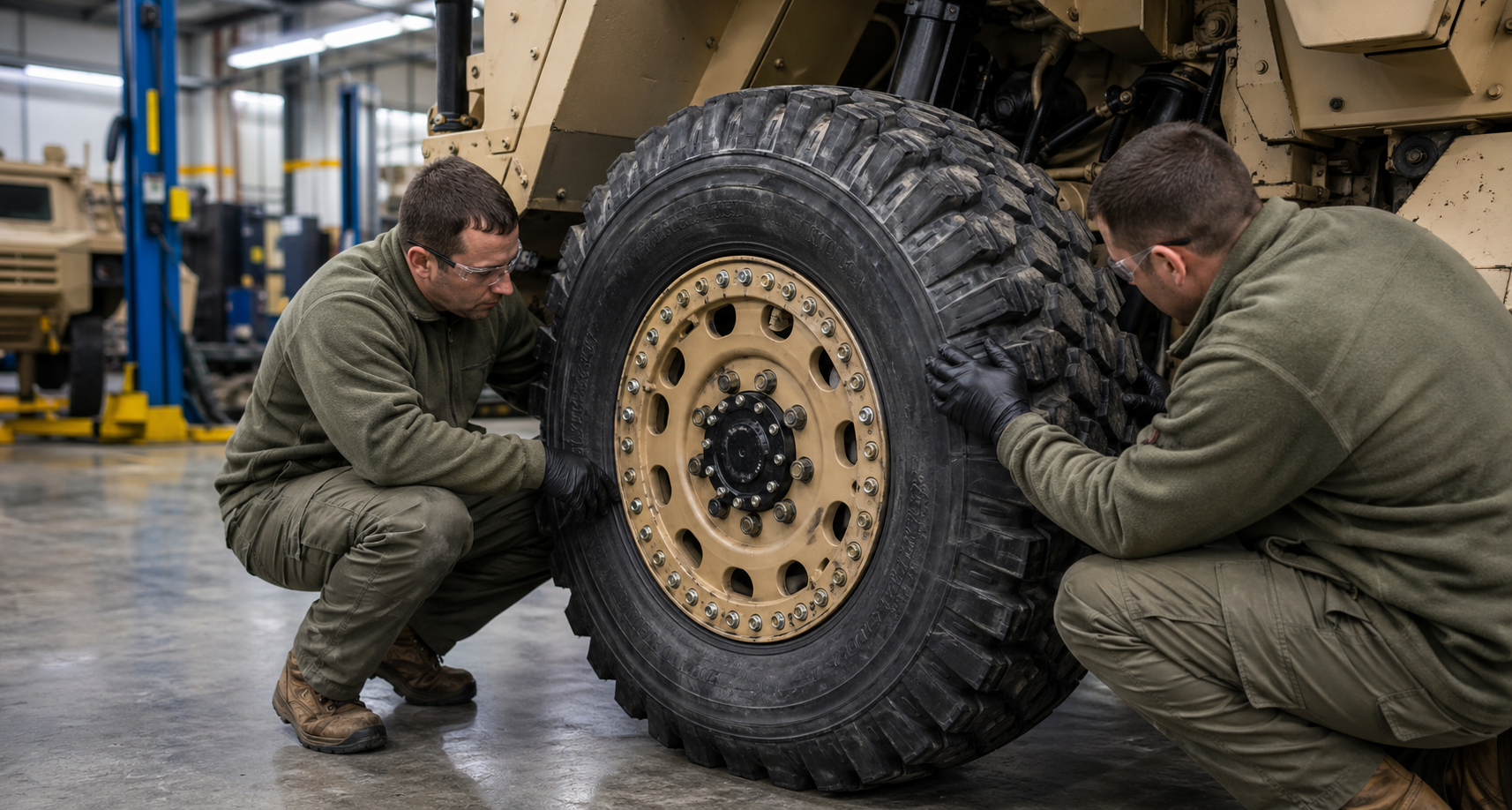
Military Run Flat Tires: Systems, Inserts, and Maintenance Considerations
Military run flat tires are part of a complete tire, insert, rim, and maintenance system used on tactical and armored vehicles. This guide explains how military run flats work, why run-flat inserts matter, and how specialized tire changers support controlled removal, installation, and maintenance workflows.
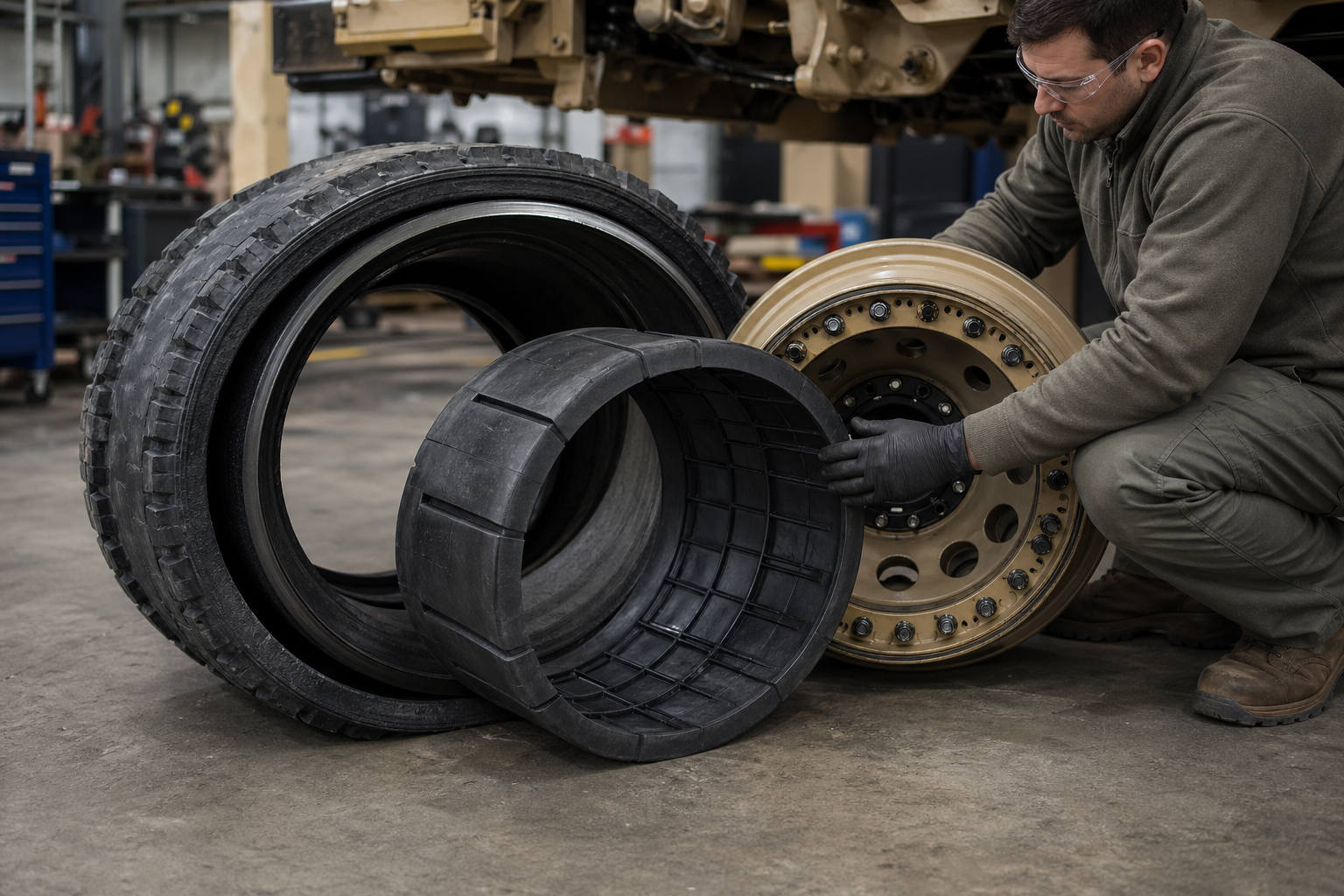
Run Flat Tire Inserts for Military Vehicles: Function, Maintenance, and Service Considerations
Run flat tire inserts are central to many military and armored vehicle tire systems. This guide explains what run-flat inserts do, why they affect removal and installation workflows, and how specialized equipment supports military tire maintenance.
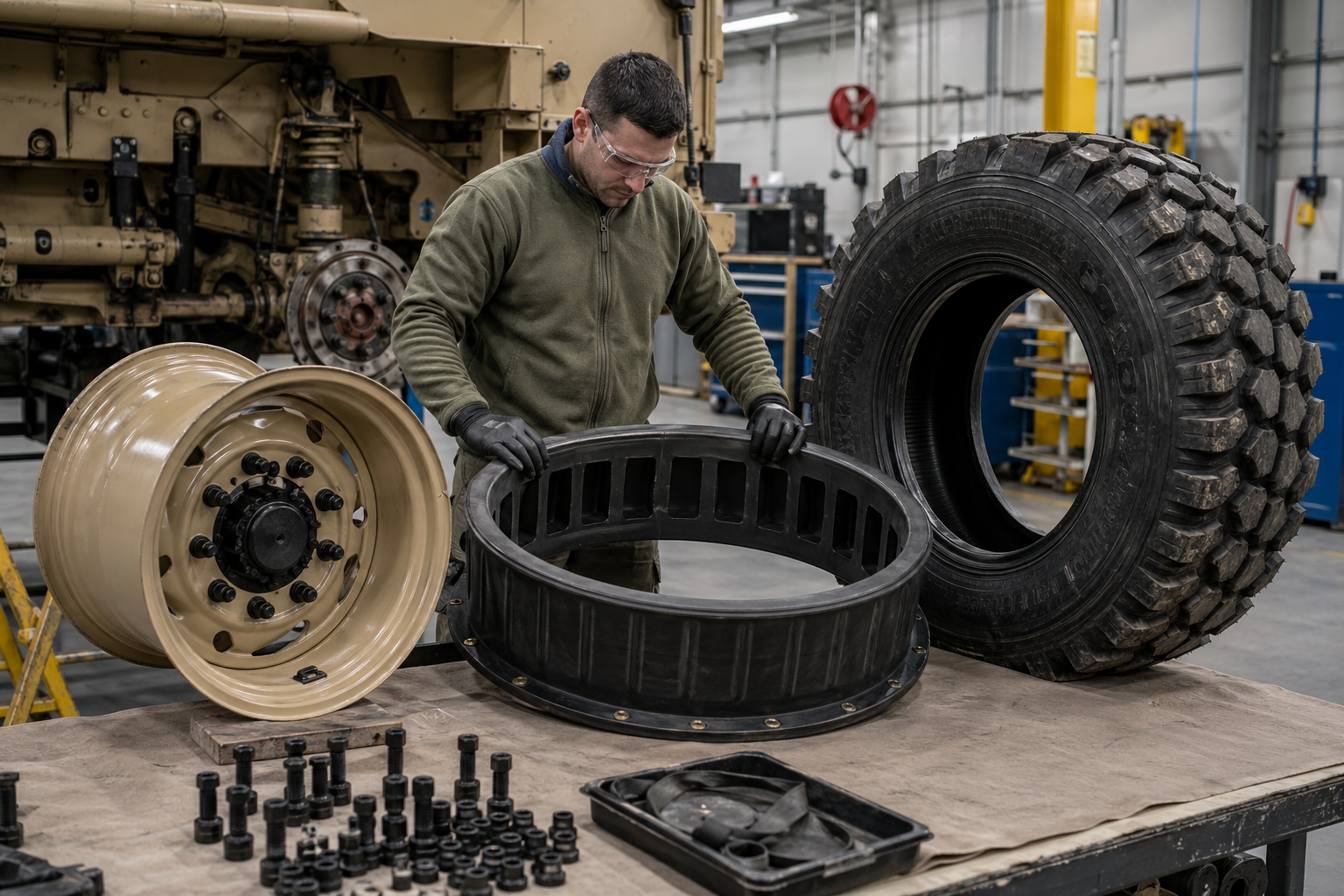
Military Run Flat Assembly: Process, Equipment, and Maintenance Considerations
Military run flat assembly involves the controlled installation of the tire, internal insert, rim, and related wheel components used on military and armored vehicles. This guide explains how assembly connects to disassembly, insert handling, specialized equipment, and workshop, container, or trailer-based maintenance workflows.